
What's Happening?
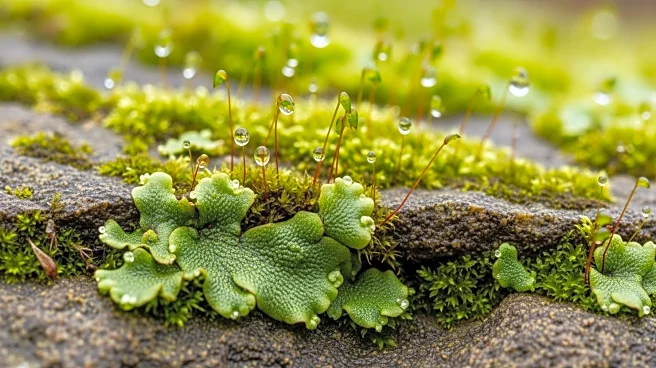
Petrifying springs, found in alpine or karst landscapes, are ecologically vital systems where calcium-rich groundwater emerges, forming travertine deposits. Bryophytes, such as Palustriella commutata,
are key biological components in these ecosystems, influencing calcite precipitation and contributing to ecosystem stability. These springs are recognized as World Natural Heritage sites due to their unique geological and ecological features. Bryophytes create complex microhabitats, retain moisture, and facilitate calcite deposition, playing a crucial role in biodiversity conservation.
Why It's Important?
The ecological functions of bryophytes in petrifying springs are significant for maintaining ecosystem health and stability. These plants contribute to travertine deposition, pollutant filtration, and support diverse aquatic communities. The conservation of these systems is crucial for preserving their ecological and heritage value. However, they face threats from climate change, pollution, and land-use changes, necessitating comprehensive conservation strategies. Understanding bryophyte-driven processes is essential for effective ecosystem management and heritage preservation.
Beyond the Headlines
Research on bryophyte diversity and function in petrifying springs is limited, with significant gaps in understanding their biophysical processes and adaptation across climatic gradients. This hinders the development of robust conservation strategies. A bibliometric analysis of global literature highlights the need for integrated research to guide future conservation efforts. Addressing these knowledge gaps is crucial for sustaining the ecological health and heritage value of petrifying springs.