
What's Happening?
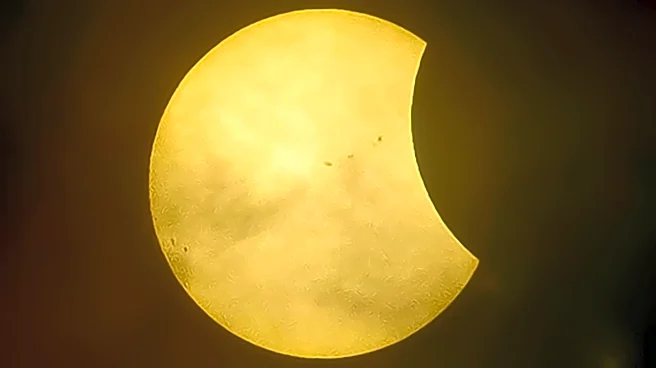
NASA has chosen the small village of Villalibado in the province of Burgos, Spain, as a key location for broadcasting the total solar eclipse on August 12. Once abandoned, the village has been revitalized
by a local businessman, Juan Ansótegui, who transformed it into a rural tourism complex. NASA's decision was influenced by the village's strategic location within the eclipse's path of totality, its unobstructed horizon, and its robust communications infrastructure. The broadcast will be managed by a team of NASA and Exploratorium scientists and technicians, who will set up their observation point near the village's church of San Salvador. The event will be streamed worldwide via NASA's digital platforms and the Exploratorium's channels, offering Villalibado unprecedented global exposure.
Why It's Important?
This event underscores the potential for rural revitalization through strategic partnerships and global events. Villalibado's selection by NASA not only highlights the village's unique geographical advantages but also showcases the impact of local entrepreneurship in transforming abandoned areas into vibrant communities. The global broadcast will bring significant attention to Villalibado, potentially boosting tourism and economic activity in the region. This development also illustrates the importance of infrastructure in rural areas, as the village's existing fiber-optic connections were a key factor in its selection. The event serves as a model for other rural communities seeking to leverage natural phenomena and technological advancements for economic and social revitalization.
What's Next?
Following the eclipse, Villalibado may experience increased interest from tourists and media, potentially leading to further economic opportunities. The successful execution of the broadcast could encourage other rural areas to invest in infrastructure improvements to attract similar events. Additionally, the collaboration between NASA and local entities might inspire future partnerships aimed at promoting scientific and educational initiatives in rural settings. The event could also lead to increased awareness and appreciation of rural landscapes and their potential for hosting significant global events.