




What's Happening?
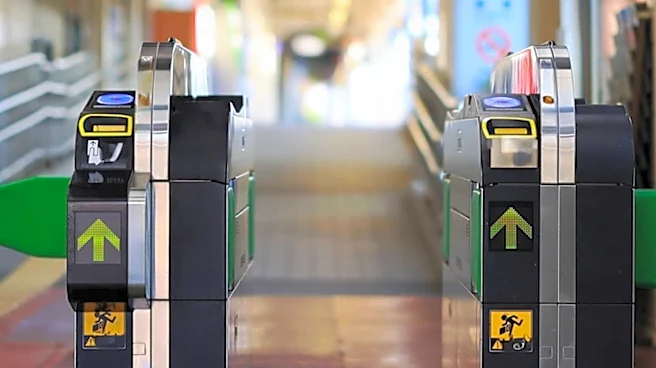
The Bi-State Development Agency of the Missouri-Illinois Metropolitan District (St. Louis Metro) and the Central Ohio Transit Authority (COTA) have completed significant upgrades to their fare collection and security systems. St. Louis Metro implemented
a Secure Platform Plan over three phases, converting its system from open to closed platforms with fencing and gates, integrating these with a new fare collection system. This initiative, which began in 2022, aimed to enhance security and reduce incidents, resulting in a 40% reduction at initial stations. COTA, in partnership with Masabi and Transit app, launched its first phase of fare collection upgrades in late 2021 with account-based ticketing (ABT) and, in early 2026, introduced open-loop payments, allowing riders to pay with tap-capable debit/credit cards or mobile wallets. Both agencies utilized phased rollouts to ensure system cohesion and rider adaptation.
Why It's Important?
These upgrades are important for several reasons, impacting both operational efficiency and rider experience in U.S. public transit. For St. Louis Metro, the security enhancements address a critical concern for public safety, aiming to create a more secure environment for passengers and staff, which can lead to increased ridership and public trust. The integration of security with fare collection also improves fare integrity, helping to recover revenue lost to fare evasion. For COTA, the move to ABT and open-loop payments significantly enhances convenience and accessibility for riders, making public transit more user-friendly and equitable, particularly for unbanked or underbanked individuals. These technological advancements reflect a broader trend in urban transit towards modernizing infrastructure, improving customer service, and leveraging technology to address both security and financial challenges, ultimately contributing to more efficient and attractive public transportation systems in major U.S. cities.
What's Next?
St. Louis Metro is set to bring its 39th station online later in 2026, completing its system-wide securement. Both agencies will continue to monitor adoption rates and address any remaining challenges, such as rider education and potential server load adjustments. COTA is exploring expanded options for under- and un-banked riders, including conversations with major card payment processors and money transfer platforms, and plans to enable its ticket vending machines to load fare into the Masabi system. The success of these phased implementations provides a model for other U.S. transit agencies considering similar upgrades, emphasizing the importance of careful planning, customer focus, and vendor coordination. The ongoing evolution of fare collection technology suggests a future where public transit becomes even more integrated with digital payment ecosystems.
Beyond the Headlines
The modernization efforts by St. Louis Metro and COTA highlight a critical intersection of technology, urban planning, and social equity in public transit. Beyond the immediate benefits of security and convenience, these projects address deeper societal issues. St. Louis Metro's focus on security, funded partly by private donations and federal stimulus funds, underscores the multifaceted approach required to tackle urban safety concerns and the role of public-private partnerships. COTA's emphasis on equitable access, by providing options for unbanked riders and integrating with university apps, demonstrates a commitment to inclusivity and expanding transit's reach. These initiatives are not just about new hardware; they represent a strategic investment in the social fabric of cities, aiming to make public spaces safer, more accessible, and more integrated into daily life, ultimately fostering greater community engagement and economic participation.