

What's Happening?
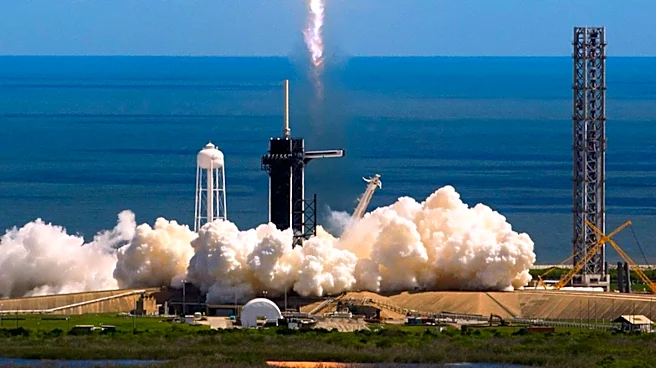
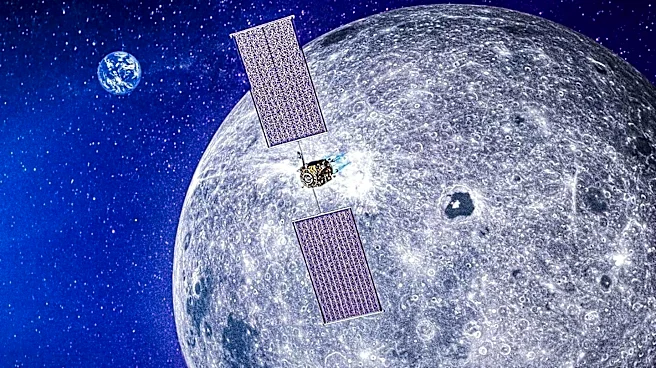
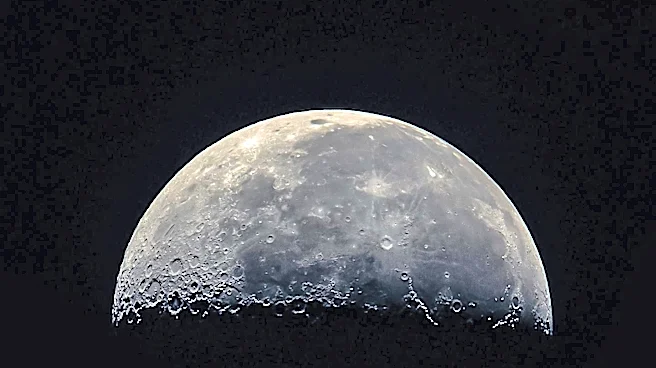
A part of a defunct SpaceX Falcon 9 rocket crashed into the moon, creating a new crater. The impact was captured by South Korea's Danuri lunar orbiter, which revealed a blackened spot on the moon's surface. The crash occurred near the Einstein crater,
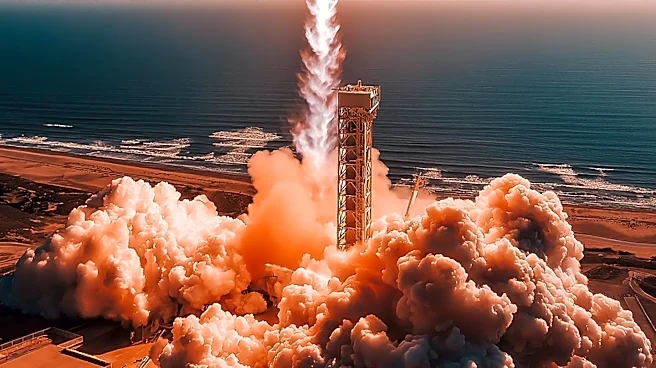
and while the initial flare was not visible from Earth, a debris plume was reported by the European Southern Observatory. The rocket part, a second stage from a 2025 launch, had been drifting in orbit before being pulled by the moon's gravity. The crash site is expected to be further examined by other lunar orbiters and Earth-based observatories.
Why It's Important?
This event underscores the growing issue of space debris and its potential impacts on celestial bodies. The crash provides an opportunity for scientists to study the moon's surface and composition, similar to past impacts that revealed subsurface ice. Understanding these impacts is crucial for future lunar missions, especially as plans for permanent human presence on the moon progress. The incident also highlights the need for better management of space debris to prevent unintended consequences on future space exploration and lunar activities.
What's Next?
Further analysis of the crash site will be conducted by NASA's Lunar Reconnaissance Orbiter and other observatories. These studies will help determine the crater's size and provide insights into the moon's geological features. The findings could inform future lunar exploration strategies and debris management policies. As space exploration continues to expand, addressing the challenges posed by space debris will become increasingly important to ensure the safety and success of missions.