





What's Happening?
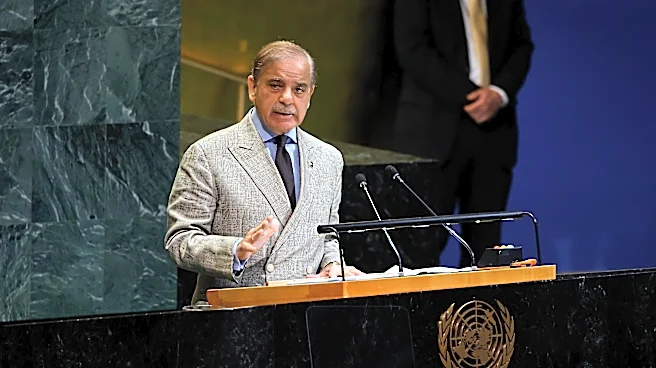
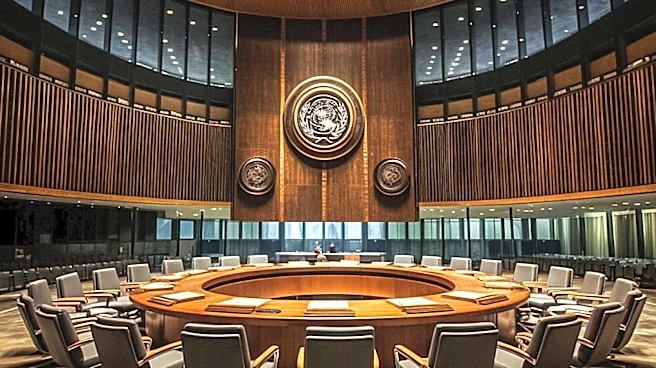
Rebeca Grynspan has publicly defended the necessity of United Nations reform, addressing skepticism about the organization's effectiveness. Grynspan emphasized that the UN must be willing to take risks and embrace significant changes to remain relevant
and impactful in the current global landscape. Her stance highlights the importance of global diplomacy and underscores the critical role of women in shaping the future of international relations and organizational reform. She advocates for a proactive approach to reform, suggesting that the UN cannot afford to maintain the status quo if it is to effectively address contemporary challenges and fulfill its mandate. This defense comes at a time when discussions around the UN's structure and operational capabilities are increasingly prevalent, with many calling for modernization to better suit 21st-century global needs.
Why It's Important?
Grynspan's advocacy for UN reform is crucial as it directly confronts the growing doubts about the organization's ability to deliver on its objectives. Her call for the UN to 'take risks and open up to reforms' suggests a recognition that incremental changes may no longer suffice. This perspective is particularly significant for U.S. foreign policy and international relations, as a more effective and reformed UN could serve as a stronger partner in addressing global issues such as climate change, humanitarian crises, and peace-keeping efforts. The emphasis on global diplomacy and the role of women also points to a potential shift towards more inclusive and diverse leadership within international bodies, which could lead to more comprehensive and equitable solutions to global problems. A revitalized UN, as envisioned by Grynspan, could enhance multilateralism and provide a more stable platform for international cooperation, benefiting U.S. interests in global stability and security.
What's Next?
The immediate next steps following Grynspan's defense of UN reform would likely involve continued discussions and proposals within UN bodies and among member states. Her statements are part of a broader ongoing dialogue about the future direction of the organization. It is probable that her emphasis on global diplomacy and the role of women will influence future reform initiatives, potentially leading to policies that promote greater gender equality and diplomatic engagement. While specific timelines for reform are not provided, her advocacy suggests a push for concrete actions rather than prolonged deliberation. The challenge will be to translate these calls for reform into actionable strategies that can garner consensus among the diverse member states, many of whom have differing views on the scope and nature of necessary changes. The ongoing debate will likely focus on identifying specific areas for reform and developing mechanisms for their implementation.
Beyond the Headlines
Beyond the immediate policy implications, Grynspan's defense of UN reform touches upon deeper philosophical questions about the nature of international governance and the role of multilateral institutions in a rapidly changing world. Her call for the UN to 'take risks' implies a need for the organization to move beyond its traditional operational frameworks and embrace innovative approaches to global problem-solving. This could involve re-evaluating the UN's foundational principles in light of new geopolitical realities, technological advancements, and evolving societal norms. The emphasis on the role of women in global diplomacy also highlights a broader cultural shift towards recognizing and valuing diverse perspectives in leadership, which could lead to more holistic and sustainable solutions to complex global challenges. Ultimately, Grynspan's message suggests that the UN's long-term legitimacy and effectiveness depend not just on structural adjustments, but on a fundamental re-imagining of its purpose and methods in the 21st century.