



What's Happening?
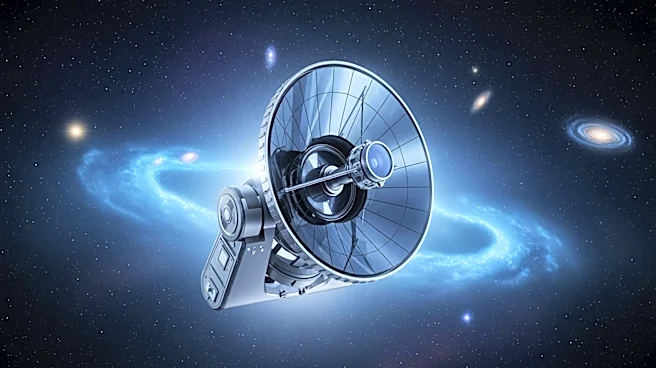
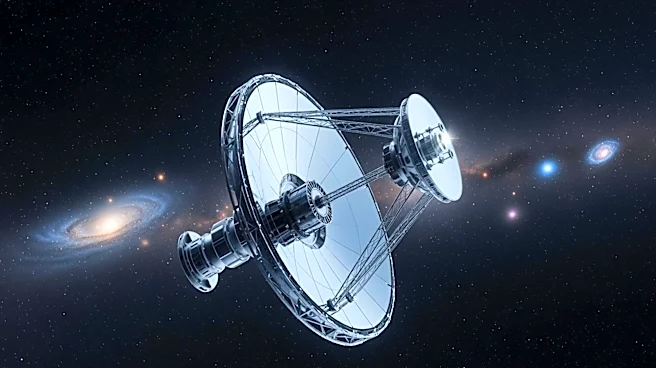
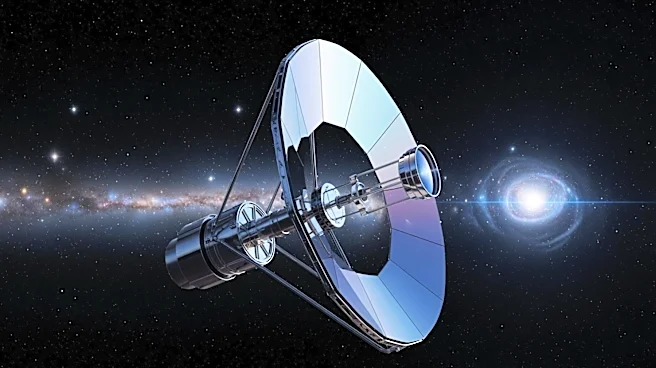
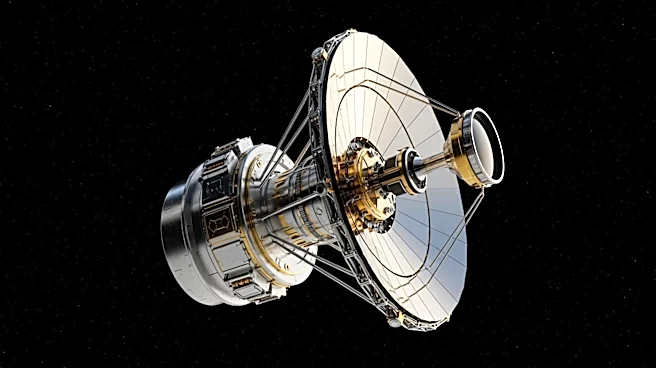
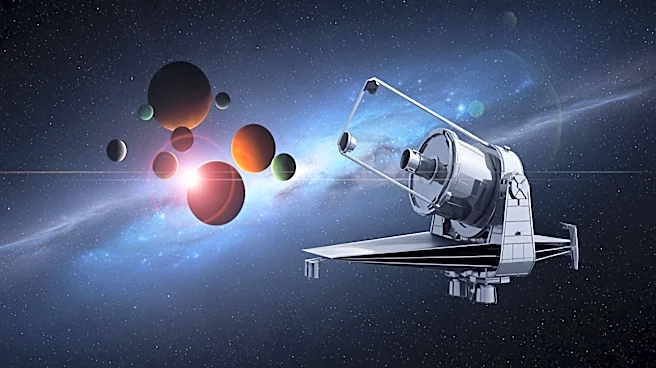
NASA is preparing to launch the Nancy Grace Roman Space Telescope in early September, with a deadline no later than May 2027. This telescope, named after NASA's first chief astronomer, is designed to have a field of view 100 times larger than the Hubble
Space Telescope. The Roman Telescope will be launched aboard a SpaceX Falcon Heavy rocket and will operate nearly 1 million miles from Earth. It is equipped with a 300.8-megapixel camera and a high-contrast coronagraph, enabling it to capture light from visible to near-infrared and study exoplanets. The mission aims to address key questions in dark energy, exoplanets, and astrophysics, potentially discovering new classes of cosmic objects.
Why It's Important?
The launch of the Nancy Grace Roman Space Telescope represents a significant advancement in astronomical research. By providing a much larger field of view than previous telescopes, it will enhance the ability to discover and study cosmic phenomena, including dark energy, which constitutes about 68% of the universe. This could lead to breakthroughs in understanding the universe's expansion and the nature of dark energy. Additionally, the telescope's capability to study exoplanets could provide insights into the potential for life beyond Earth. The mission underscores NASA's commitment to expanding our knowledge of the cosmos and could have profound implications for science and technology.
What's Next?
Following its launch, the Nancy Grace Roman Space Telescope will begin its mission to explore the universe from its vantage point nearly 1 million miles from Earth. It will work in conjunction with other NASA observatories like the James Webb Space Telescope and the Chandra X-ray Observatory. The data collected by Roman will be crucial for future research and may lead to the discovery of previously unknown cosmic objects. The scientific community will be closely monitoring the telescope's findings, which could influence future space missions and research priorities.