



What's Happening?
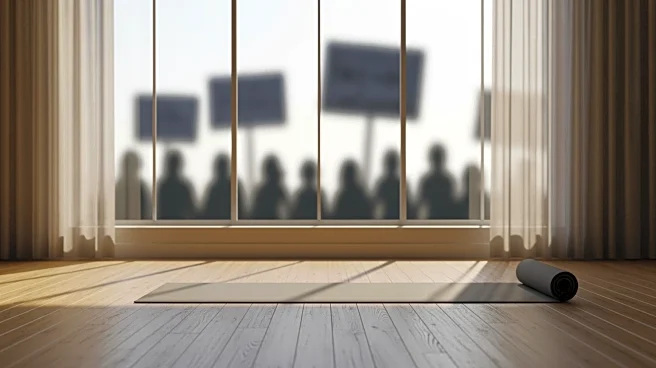
CorePower Yoga, the largest yoga studio brand in the U.S., is at the center of a national controversy following a viral video that sparked protests over its handling of U.S. Immigration and Customs Enforcement (ICE) policies. The video, which has garnered
nearly 500,000 views, shows studio members confronting staff about the company's stance on ICE. This comes in the wake of heightened tensions in Minneapolis, where an ICE-related incident led to the death of a U.S. citizen. CorePower Yoga has since implemented signage stating that law enforcement and ICE may only enter with a valid judicial warrant. The company also hosted over 1,800 free classes nationwide, allowing attendees to donate to the Immigrant Law Center of Minnesota. Despite these measures, the incident has led to resignations among instructors and raised questions about the role of activism in wellness spaces.
Why It's Important?
The situation highlights the intersection of social activism and corporate responsibility within wellness spaces, a sector traditionally seen as apolitical. CorePower Yoga's response to ICE activities reflects broader societal debates on immigration enforcement and corporate ethics. The protests and resignations underscore the challenges companies face in balancing business operations with social justice issues. This incident could influence how other wellness and fitness brands address similar concerns, potentially leading to industry-wide changes in policies regarding law enforcement interactions. The controversy also raises questions about the responsibilities of businesses in protecting their employees and clients, particularly those from immigrant communities.
What's Next?
CorePower Yoga may need to further clarify its policies and engage in dialogue with both employees and clients to address ongoing concerns. The company could face continued scrutiny and potential boycotts if it fails to adequately address the issues raised by the protests. Other wellness brands might also reevaluate their policies and public stances on social issues to avoid similar controversies. The broader conversation about the role of businesses in social activism is likely to continue, with potential implications for corporate practices across various industries.