
What's Happening?
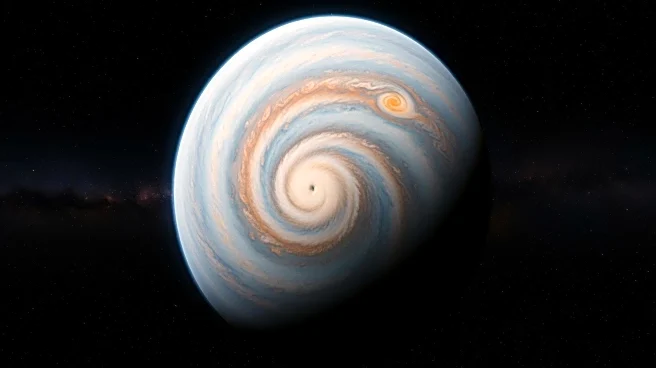
Researchers have successfully measured the mass of a free-floating, or rogue, planet the size of Saturn, located nearly 10,000 light years away. This discovery was made possible through a combination of ground-based
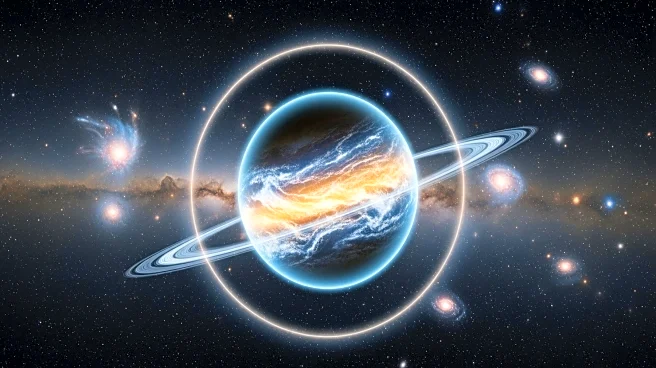
telescopes and the Gaia space telescope. The planet, identified as KMT-2024-BLG-0792 and OGLE-2024-BLG-0516, was detected using gravitational microlensing, a method where a planet's gravitational pull bends light from a distant source, creating a halo effect. This marks the first time the mass of such a rogue planet has been measured, providing a rare insight into these elusive celestial bodies.
Why It's Important?
The ability to measure the mass of a rogue planet is a significant advancement in understanding planetary formation and the dynamics of planetary systems. Rogue planets, which are not bound to any star, offer clues about the processes that can eject planets from their original systems. This discovery fills a gap in the 'Einstein desert,' a size range where rogue planets are rarely found. Understanding these planets can shed light on the early stages of planetary system formation and the potential for similar events in our own solar system.
What's Next?
The discovery of this rogue planet paves the way for future research into free-floating planets. NASA's upcoming Nancy Grace Roman Space Telescope, set to launch in 2027, is expected to find many more rogue planets, enhancing our understanding of their prevalence and characteristics. This research will contribute to a broader understanding of planetary system dynamics and the potential for planets to exist outside traditional systems.