




What's Happening?
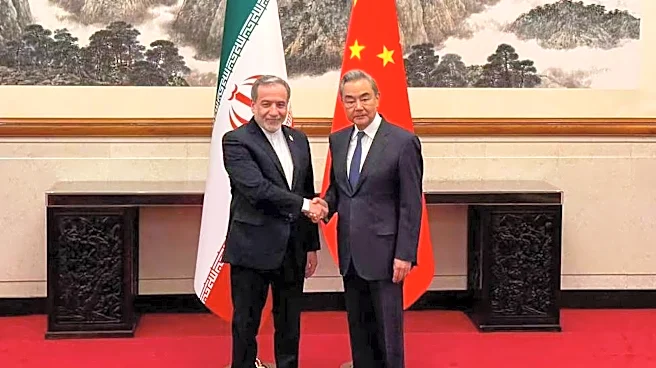
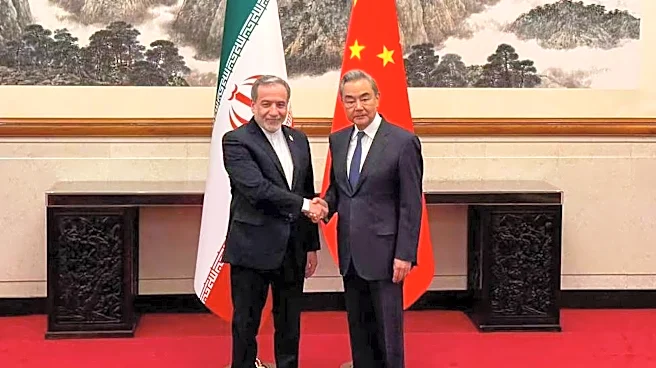
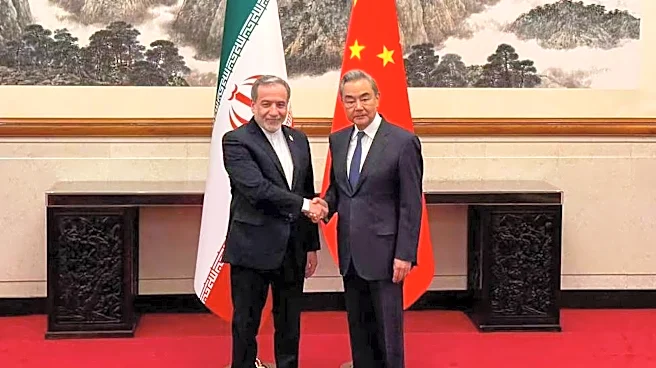
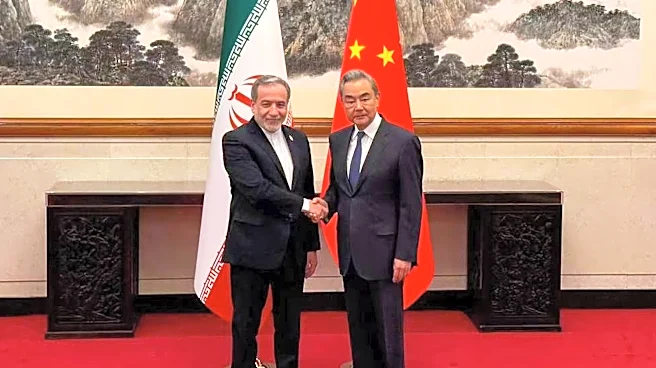
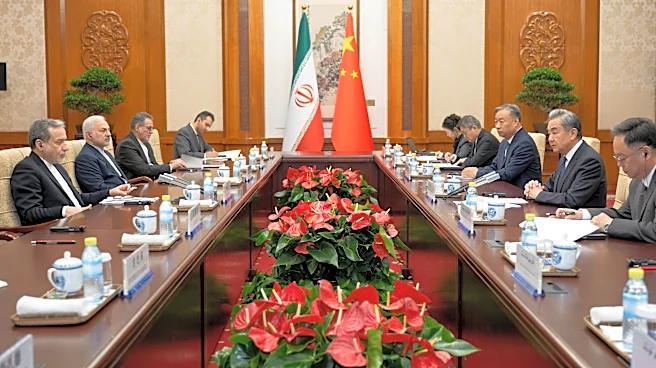
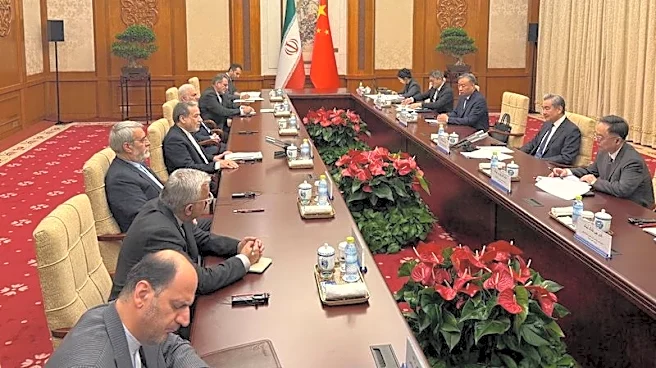
Iranian media have praised China's recent diplomatic support, highlighting Foreign Minister Abbas Araghchi's visit to Beijing and meetings with senior Chinese officials. Chinese Foreign Minister Wang Yi condemned US and Israeli actions, describing the
region as at a 'decisive turning point.' Despite this rhetoric, China's support is limited to mediation rather than military alignment. Beijing's primary concerns include maintaining stability in the Strait of Hormuz and avoiding direct confrontation with the US. China's strategic partnership with Iran is balanced by its broader regional interests and economic ties with other Gulf states.
Why It's Important?
China's diplomatic support for Iran underscores the complex geopolitical dynamics in the Middle East. While Beijing's rhetoric aligns with Tehran's interests, its actions reflect a cautious approach to avoid jeopardizing its economic and strategic interests in the region. This balancing act highlights China's role as a major global player seeking to influence regional stability without direct involvement in conflicts. The situation also illustrates the limitations of strategic partnerships when broader economic and geopolitical interests are at stake, impacting global energy markets and regional power balances.
Beyond the Headlines
China's dual messaging—supporting Iran rhetorically while warning against escalation—reveals its strategic priorities. Beijing's focus on stability in the Strait of Hormuz is driven by its reliance on energy imports from the Gulf. The situation highlights the challenges of maintaining strategic partnerships in volatile regions, where economic interests often outweigh political alliances. China's approach may influence other global powers' strategies in the Middle East, as they navigate similar complexities in balancing regional influence with economic interests.