

What's Happening?
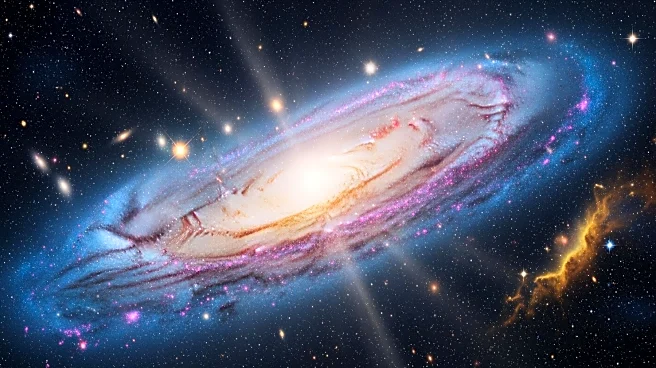
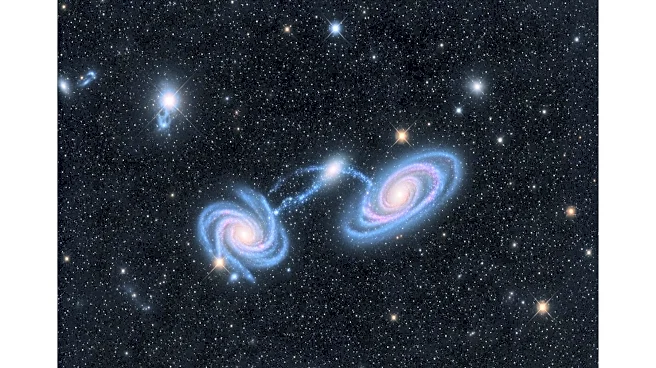
NASA's James Webb Space Telescope has captured an image of two interacting dwarf galaxies, NGC 4490 and NGC 4485, located approximately 24 million light-years away in the constellation Canes Venatici. This observation provides valuable insights into the nature
of dwarf galaxies, which are thought to resemble early universe galaxies with less mass and fewer stars. The interaction between these galaxies offers clues about how galaxies might have evolved billions of years ago, contributing to our understanding of cosmic history.
Why It's Important?
The study of dwarf galaxies is crucial for understanding the formation and evolution of galaxies in the early universe. By observing these interactions, astronomers can gain insights into the processes that shaped the universe's structure. The findings from the James Webb Space Telescope enhance our knowledge of cosmic evolution and the role of dwarf galaxies in the broader context of galaxy formation. This research has implications for astrophysics and cosmology, potentially influencing future studies and theories about the universe's origins.