
What's Happening?
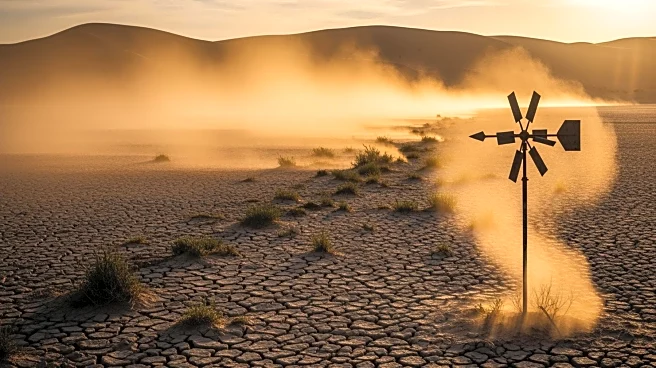
China and Mongolia are facing significant challenges due to massive dust storms affecting northern China, including Beijing. These storms are largely attributed to environmental degradation in Mongolia,
exacerbated by climate change and resource exploitation. In response, China has been exporting its expertise in desertification control to Mongolia, including initiatives like the 'great green wall' and the establishment of a China-Mongolia desertification prevention center in Ulaanbaatar. This collaboration aims to address the severe land degradation in Mongolia, where nearly 77% of the land is classified as degraded. The upcoming UN conference in Ulaanbaatar will further explore these issues, highlighting China's role in global desertification control efforts.
Why It's Important?
The collaboration between China and Mongolia is crucial as it addresses the broader environmental and socio-economic impacts of desertification, which affects millions of people in the region. Dust storms not only pose health risks but also disrupt daily life and economic activities. China's involvement in Mongolia's environmental strategies reflects its growing influence in regional environmental policies and its commitment to tackling climate change. However, the approach has raised concerns about the impact on local herders and the potential for cultural and economic disruptions, as China's methods often involve resettlement and land use changes.
What's Next?
The upcoming UN conference in Mongolia will be a pivotal moment for both countries to showcase their efforts and strategies in combating desertification. It will also provide a platform for international collaboration and knowledge exchange. The success of these initiatives will depend on balancing environmental goals with the socio-economic needs of local communities, particularly herders who are integral to Mongolia's cultural identity. The conference may also influence future policies and funding for desertification control in other regions facing similar challenges.
Beyond the Headlines
The collaboration between China and Mongolia highlights the complex interplay between environmental policies and cultural heritage. While China's strategies have been effective in some areas, they may not be directly applicable to Mongolia due to differences in land use practices and cultural values. The emphasis on large-scale projects like the 'great green wall' may overlook the importance of traditional land management practices that have sustained Mongolian herders for centuries. This situation underscores the need for culturally sensitive approaches to environmental challenges.