





What's Happening?
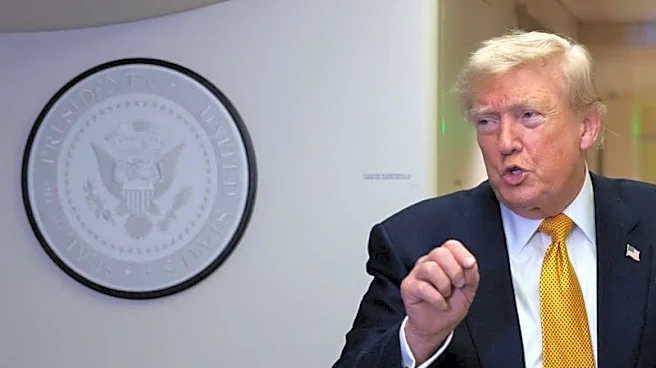
A recent U.S. Supreme Court decision has granted President Trump the authority to dismiss members of independent federal agencies, such as the Federal Trade Commission (FTC), at will. This decision, stemming from the case Trump v. Slaughter, allows the president
to exert control over these agencies by instilling fear of dismissal among federal officials. The ruling has sparked concerns about the potential invalidation of administrative adjudications due to the fear of dismissal, which could compromise due process. The decision is based on the Article II removal power, which aims to align agency actions with presidential policies. Critics argue that this power could lead to biased adjudications, as officials may prioritize presidential preferences over impartial decision-making.
Why It's Important?
The Supreme Court's decision has significant implications for the functioning of independent federal agencies. By allowing the president to dismiss agency members at will, the ruling could undermine the independence of these bodies, which are designed to operate free from political influence. This shift may lead to a chilling effect on agency decision-making, as officials might prioritize presidential preferences to avoid dismissal. The potential for biased adjudications raises concerns about the integrity of administrative processes and the protection of due process rights. The ruling could also impact the balance of power between the executive branch and independent agencies, potentially leading to increased executive control over regulatory and adjudicative functions.
What's Next?
The decision may prompt legal challenges from parties adversely affected by agency adjudications, citing violations of due process. Congress could intervene to address the tension between Article II and the Due Process Clause by enacting legislation to protect the independence of federal agencies. Additionally, the ruling may lead to increased scrutiny of agency actions and decisions, as stakeholders seek to ensure that adjudications are conducted fairly and without undue influence from the executive branch. The long-term impact of the decision will depend on how it is implemented and whether legislative or judicial measures are taken to mitigate its effects.