
What's Happening?
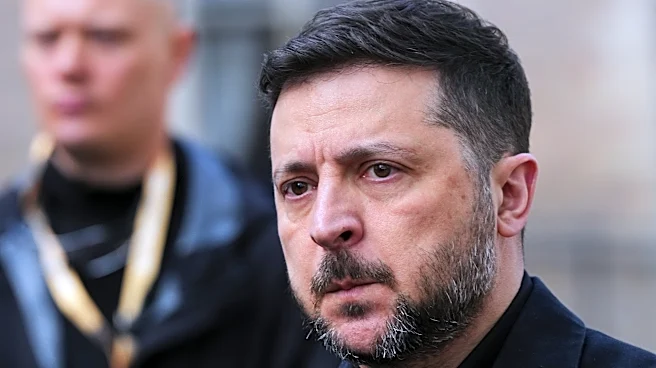
Ukrainian President Volodymyr Zelenskyy announced that the Druzhba pipeline, which transports Russian oil to Europe, is ready to resume operations following repairs. This development is expected to facilitate
the release of a 90-million-euro EU loan, previously blocked by Hungary due to its dependency on Russian oil. The pipeline, damaged during Russia's invasion of Ukraine, has been a point of contention, with Hungary and Slovakia accusing Ukraine of delaying repairs. The resumption of the pipeline is anticipated to lead to Hungary lifting its veto on the EU loan, crucial for Ukraine's budgetary needs.
Why It's Important?
The resumption of the Druzhba pipeline is pivotal for Ukraine's economic stability, as the EU loan is essential to address budget deficits exacerbated by the ongoing conflict. The situation also highlights the geopolitical dynamics within the EU, where energy dependencies influence political decisions. For Hungary, the pipeline's operation is vital for its energy security, while for Ukraine, it represents a step towards securing financial support from the EU. The development underscores the interconnectedness of energy infrastructure and political alliances in Europe.
What's Next?
EU ambassadors are expected to approve the release of the blocked loan, contingent on the pipeline's operation. This decision will likely influence future EU-Ukraine relations and energy policies. Additionally, the Kremlin's readiness to resume oil flows through the pipeline, contingent on Ukraine's actions, suggests ongoing negotiations and potential diplomatic engagements. The outcome will be closely watched by EU member states and international observers, as it may set precedents for handling similar geopolitical and energy-related issues.