






What's Happening?
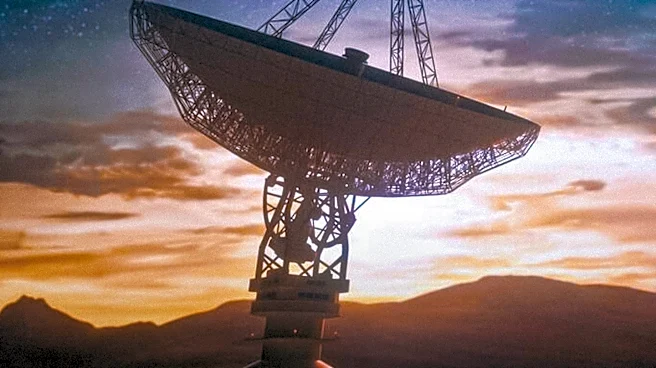
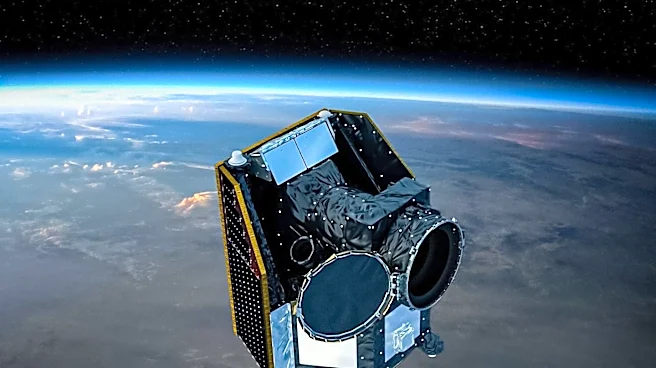
General Dynamics Mission Systems (GDMS) has been awarded a $99.3 million task order by the U.S. Space Force to modify the Mobile User Objective System (MUOS) ground segment. This contract aims to support two service-life-extension satellites, ensuring
the continued availability of the MUOS waveform worldwide into fiscal year 2035 and the supporting ground system into fiscal year 2040. The cost-plus-award-fee contract covers the design, upgrade, integration, and deployment of necessary changes, with work to be performed in Scottsdale, Arizona, through September 3, 2028. This sole-source award follows a separate $2 billion contract won by Boeing in June for the design, development, and production of the two MUOS service-life-extension satellites.
Why It's Important?
This contract is crucial for maintaining and enhancing the U.S. military's global satellite communications capabilities. The Mobile User Objective System (MUOS) provides secure, beyond-line-of-sight voice and data communications for mobile warfighters, making its continued operation vital for national security. By extending the service life of the MUOS waveform and ground system, the Space Force ensures that critical communication infrastructure remains operational for an extended period, supporting military operations worldwide. The investment in upgrading the ground segment, alongside the development of new satellites, demonstrates a commitment to modernizing and sustaining essential space assets. This also signifies continued business for defense contractors like General Dynamics Mission Systems, reinforcing their role in supporting U.S. defense initiatives and contributing to the technological advancement of military communication systems.
What's Next?
The work on the MUOS ground segment upgrade by General Dynamics Mission Systems is scheduled to run through September 3, 2028. This timeline aligns with the broader effort to integrate the two new service-life-extension satellites, which Boeing is developing under a separate contract, with work extending through September 30, 2035. The Space Force's ongoing commitment to MUOS is further evidenced by previous awards to GDMS, including a $30 million task order in August for MUOS ground resiliency upgrades and a $106 million sustainment and modernization task order in May. These continuous investments indicate a long-term strategy to ensure the reliability and effectiveness of the MUOS system for military communications. Future developments will likely focus on the seamless integration of the new satellites with the upgraded ground infrastructure and ongoing maintenance to ensure operational continuity.
Beyond the Headlines
The sustained investment in the MUOS system, particularly the extension of its service life, highlights the enduring importance of secure and reliable satellite communications for modern military operations. In an increasingly contested space environment, ensuring the longevity and resilience of such critical assets is paramount. This effort also reflects a broader trend in military procurement towards extending the life of existing systems while simultaneously developing next-generation capabilities. The sole-source nature of the GDMS contract for the ground segment upgrade suggests a high level of specialized expertise and integration required, underscoring the complexity of these systems. Furthermore, the collaboration between different defense contractors like GDMS and Boeing on interconnected projects demonstrates the intricate ecosystem of the U.S. defense industry, where multiple companies contribute to different facets of a larger strategic objective. The long-term commitment to MUOS also implies a continued reliance on geosynchronous orbit for critical communications, even as new proliferated low-Earth orbit constellations are being developed.