
What's Happening?
At the Davos 2026 summit, artificial intelligence (AI) has become a central topic of discussion, overshadowing traditional issues like trade tariffs and geopolitical tensions. Key figures such as Satya
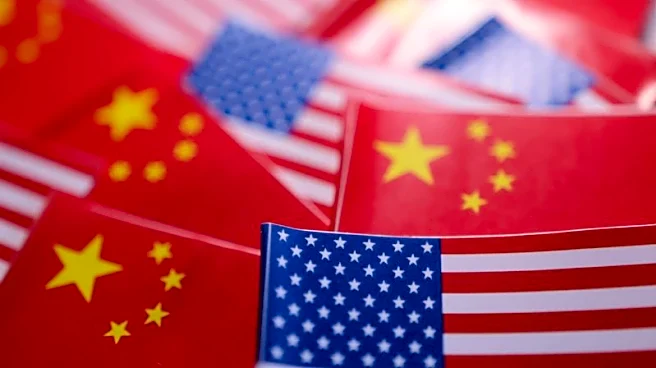
Nadella of Microsoft, Yoshua Bengio, and Yuval Harari have shared their insights on AI's potential and risks. Nadella emphasized the need for AI to be used for beneficial purposes, highlighting the uneven global distribution of AI deployment due to infrastructure and capital constraints. Bengio warned against the anthropomorphization of AI, stressing that AI systems are not human. Harari cautioned about the dangers of AI superintelligence, advocating for a correction mechanism to manage potential risks. Dario Amodei of Anthropic discussed the geopolitical implications of AI, particularly concerning the U.S. and China, while Demis Hassibis of Google DeepMind expressed optimism about AI creating new, meaningful jobs.
Why It's Important?
The discussions at Davos highlight the transformative potential of AI on global industries and societies. Nadella's comments underscore the importance of infrastructure and investment in realizing AI's benefits, which could lead to significant economic and social advancements. Bengio and Harari's warnings about AI's human-like capabilities and superintelligence reflect growing concerns about ethical and safety issues, which could influence future regulatory frameworks. Amodei's focus on geopolitical dynamics, particularly the U.S.-China tech rivalry, points to strategic considerations that could shape international relations and economic policies. Hassibis's optimism about job creation suggests that AI could redefine labor markets, potentially leading to shifts in employment patterns and educational priorities.
What's Next?
The future of AI will likely involve increased regulatory scrutiny and international cooperation to address ethical and safety concerns. Policymakers may need to develop frameworks to manage AI's impact on labor markets and ensure equitable access to AI technologies. The geopolitical competition between the U.S. and China could intensify, influencing global tech policies and alliances. As AI continues to evolve, businesses and governments will need to adapt to new economic realities and societal expectations, potentially leading to significant shifts in public policy and industry practices.