




What's Happening?
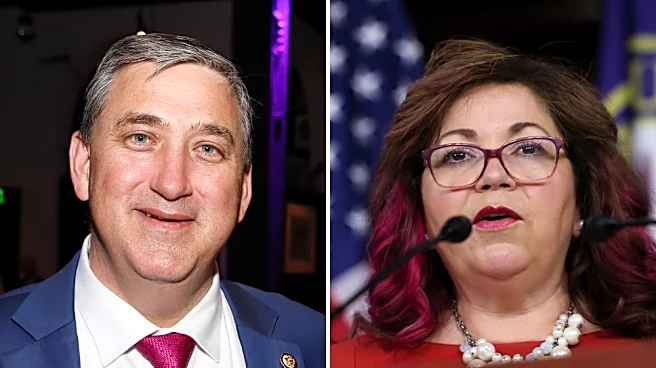
U.S. Senators Alex Padilla (D-Calif.), Adam Schiff (D-Calif.), and Sheldon Whitehouse (D-R.I.), along with U.S. Representative Salud Carbajal (D-Calif.-24) and 14 other colleagues, have filed an amicus brief in the case of California v. Wright. This brief challenges
the Trump Administration's use of the Defense Production Act (DPA) to facilitate the restart of the Sable Offshore oil pipeline system along California’s Central Coast. The lawmakers argue that the Administration has failed to identify a legitimate national defense need for Sable’s crude oil and that the DPA order does not meet the statutory requirements for invoking such extraordinary authority. They contend that Sable produces crude oil, not finished fuels for the military, and that no connection has been established between Sable’s production and an unmet military fuel requirement.
Why It's Important?
This amicus brief is significant because it directly challenges the executive branch's interpretation and application of the Defense Production Act, a powerful tool typically reserved for national emergencies. The lawmakers' argument that the DPA was misused to benefit a specific company and advance a political agenda, rather than address a genuine national defense need, raises questions about the checks and balances on executive power. If successful, this challenge could set a precedent for limiting the DPA's use in environmental and energy policy, potentially preventing future administrations from invoking it for purposes not directly related to national security. It also highlights the ongoing tension between environmental protection and fossil fuel development, particularly in coastal regions vulnerable to oil spills.
What's Next?
The amicus brief will be considered by the U.S. District Court for the Central District of California in the ongoing case of California v. Wright. The court's decision will determine whether the Trump Administration's invocation of the Defense Production Act for the Sable Offshore pipeline restart was lawful. Depending on the ruling, there could be significant implications for the future of the Sable pipeline, potentially leading to its continued shutdown or allowing its restart. This case could also influence how future administrations utilize the DPA, particularly concerning energy projects and environmental regulations. Stakeholders, including environmental groups, energy companies, and other lawmakers, will closely monitor the court's proceedings and decision.
Beyond the Headlines
This legal challenge delves into deeper implications regarding the balance of power between the executive and legislative branches, particularly concerning the use of emergency powers. The lawmakers' assertion that the DPA was used as a 'corporate rescue operation for political allies' rather than for national defense suggests a potential for abuse of executive authority. This case could contribute to a broader debate about the scope of presidential powers and the criteria for invoking acts like the DPA. Furthermore, it underscores the persistent political and legal battles over environmental protection versus economic interests, especially in states like California with strong environmental regulations and a history of oil-related incidents. The outcome could influence future environmental policy and the regulatory landscape for energy projects.