
What's Happening?
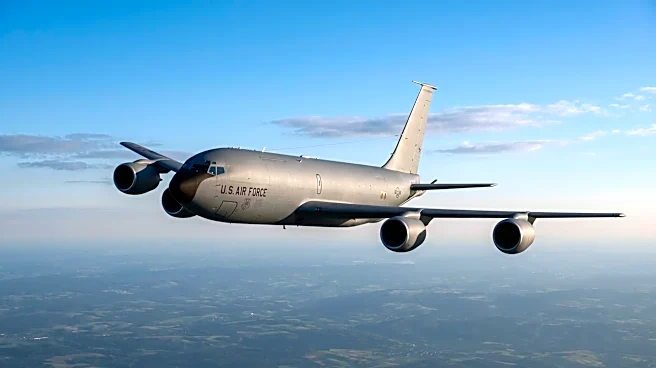
Two U.S. Air Force KC-135 tanker aircraft have departed Bulgaria's Bezmer air base, approximately one month after their deployment sparked anger from Iran. Bulgaria's Defense Minister Dimitar Stoyanov
confirmed the departure on Saturday, stating the planes left on Friday. The United States had requested the temporary deployment under an agreement for joint use of military facilities, amidst an ongoing conflict with Iran since February 28. Iran had previously condemned the deployment as complicity in 'aggression and war crimes,' a charge dismissed by Sofia. The deployment, approved by Bulgaria's parliament on July 22, also led to protests from local residents concerned about potential attacks by Iranian missiles and drones. Minister Stoyanov clarified that all flights conducted during the temporary deployment were training missions over allied countries and that Bulgaria had no information regarding direct threats to its national security. U.S. authorities have not yet commented on the departure.
Why It's Important?
The departure of U.S. tanker aircraft from Bulgaria highlights the delicate geopolitical balance and the complexities of military alliances in regions affected by international conflicts. The incident underscores the challenges faced by the U.S. in maintaining its military presence and operational capabilities abroad, particularly when such deployments draw criticism from adversarial nations like Iran. For Bulgaria, the situation demonstrates the pressure it faces as a NATO ally, balancing its commitments to the U.S. with concerns from its own populace and the potential for regional destabilization. The Iranian reaction, labeling the deployment as complicity in 'aggression and war crimes,' reflects the heightened tensions in the broader Middle East and Eastern Europe, where U.S. military activities are closely scrutinized. This event could influence future decisions regarding U.S. military deployments in allied nations, potentially leading to more cautious approaches to avoid escalating regional tensions or drawing allies into direct confrontations.
What's Next?
The immediate aftermath of the U.S. tanker aircraft's departure will likely involve continued monitoring of the geopolitical landscape, particularly regarding Iran's reactions and any potential shifts in its rhetoric or actions. Bulgaria will likely continue to emphasize its sovereign decision-making and its commitment to national security, as articulated by Defense Minister Stoyanov. The U.S. may issue a statement regarding the aircraft's redeployment or the broader strategic implications of the incident, though no comment has been made yet. This event could prompt a review of existing agreements for joint military facility use between the U.S. and its allies, especially in regions prone to geopolitical sensitivities. Future U.S. military deployments in allied countries might face increased scrutiny and require more extensive diplomatic efforts to mitigate potential backlash from regional adversaries or local populations. The incident also serves as a reminder of the ongoing conflict between the U.S. and Iran, suggesting that similar diplomatic or military tensions could arise from future U.S. military movements in the region.
Beyond the Headlines
This incident extends beyond a simple military redeployment, touching upon the broader implications of U.S. foreign policy and its impact on allied nations. The protests from Bulgarian residents underscore the public's growing awareness and concern about being drawn into international conflicts, even through seemingly routine military exercises. This public sentiment can influence political decisions in allied countries, potentially leading to greater domestic pressure on governments to limit foreign military presence or activities. Furthermore, Iran's strong condemnation, despite being dismissed by Sofia, highlights the persistent narrative of U.S. military actions being perceived as aggressive by certain states, which can fuel anti-Western sentiment and complicate diplomatic efforts. The event also subtly reveals the strategic importance of air refueling capabilities in modern warfare, as the KC-135 tankers are crucial for extending the reach and endurance of U.S. air power. The controversy surrounding their temporary deployment in Bulgaria, a country geographically distant from the primary conflict zone, illustrates the far-reaching logistical and political considerations involved in projecting military force globally.