






What's Happening?
The Dutch government, through its Directorate General for International Cooperation, has launched a ten-year 'Soil Values' program in Burkina Faso, Niger, Nigeria, and Mali. The initiative, led by IFDC, SNV, and Wageningen University, aims to improve
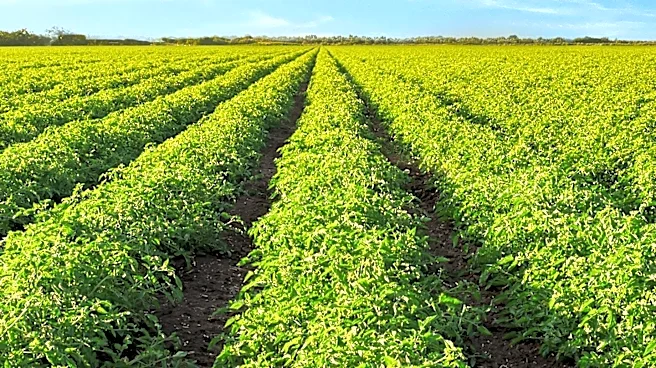
soil health and boost agricultural productivity for smallholder farmers in the Sahel. The program focuses on promoting agroecology, developing inclusive markets, and fostering supportive institutional environments. SNV is tasked with integrating community and landscape approaches to enhance soil fertility and water conservation through participatory watershed management.
Why It's Important?
The Soil Values program addresses critical challenges faced by smallholder farmers in the Sahel, a region plagued by poor soil health and water scarcity. By improving agricultural productivity, the initiative aims to enhance food security and resilience among marginalized communities. The program's focus on inclusive markets and institutional support is crucial for sustainable development, as it empowers local communities and promotes economic growth. The success of this initiative could serve as a model for similar efforts in other regions facing environmental and agricultural challenges.
What's Next?
As the program progresses, SNV will continue to engage with local communities and stakeholders to implement sustainable land management practices. The initiative will focus on training and capacity-building to ensure long-term impact. Monitoring and evaluation will be key to assessing the program's effectiveness and making necessary adjustments. The involvement of international partners and local governments will be essential in scaling up successful practices and ensuring the program's sustainability.
Beyond the Headlines
The Soil Values program highlights the importance of integrating traditional knowledge with modern agricultural practices to address environmental challenges. It underscores the need for collaborative approaches that involve local communities in decision-making processes. The initiative also emphasizes the role of gender equality and social inclusion in achieving sustainable development, ensuring that women and marginalized groups have a voice in shaping their communities' future.