






What's Happening?
Girls from 108 countries have collaborated on the ShakthiSAT space mission, an initiative that has set a world record for an all-girls space project. This mission, supported by India's diplomatic efforts, aims to leverage space technology for international
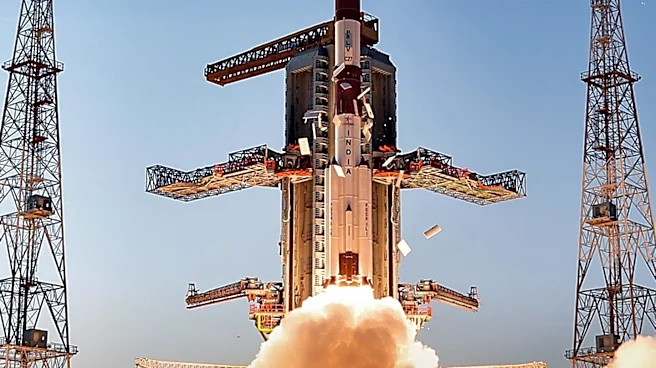
scientific cooperation and youth diplomacy. The satellite is scheduled to be launched aboard India's Small Satellite Launch Vehicle (SSLV). The project, led by Space Kidz India, has completed its Phase 2 program, bringing together young women and representatives globally to work on spacecraft engineering and satellite development. Participants gained hands-on experience in spacecraft systems, satellite engineering, electrical fabrication, payload integration, and mission-related technologies. A key achievement was the student-led development and integration of a 12U CubeSat, a compact satellite designed for multiple scientific and technological payloads. The initiative involved international payload teams and institutions from various countries, including the United States, Latvia, Egypt, Brazil, Australia, Switzerland, and the Philippines.
Why It's Important?
This international collaboration highlights the growing role of space technology as a platform for global scientific cooperation and youth diplomacy. The involvement of girls from over a hundred countries, including the United States, underscores a significant effort to expand access to aerospace engineering and space science, fields traditionally dominated by specialized technical training and professional institutions. By providing hands-on experience in satellite development, the mission fosters a new generation of scientists and engineers, particularly empowering young women in STEM fields. The initiative also serves as a unique form of youth diplomacy, bringing together diverse cultural and national backgrounds to work on a common scientific goal. This could lead to stronger international ties and a more inclusive future in space exploration and technology, potentially influencing educational policies and funding for STEM programs globally.
What's Next?
The ShakthiSAT satellite is slated for launch aboard India's Small Satellite Launch Vehicle (SSLV). The completion of Phase 2 marks a significant milestone in the program's satellite development journey. Following the launch, the mission will likely focus on the operational phase of the satellite, utilizing its scientific and technological payloads. The success of this mission could inspire similar international collaborations and further initiatives aimed at promoting STEM education and youth involvement in space technology. Continued engagement with India's diplomatic ecosystem, including the Ministry of External Affairs, suggests ongoing support for space education as a tool for fostering international cooperation. Future phases might involve analyzing the data collected by the CubeSat and disseminating the findings to the participating countries and scientific communities.
Beyond the Headlines
The ShakthiSAT mission transcends its immediate scientific objectives by fostering a powerful narrative of inclusivity and global unity in the realm of space exploration. It challenges traditional gender barriers in STEM, demonstrating that young women from diverse backgrounds can lead and innovate in highly technical fields. The project's emphasis on youth diplomacy suggests a long-term vision for building international relationships through shared scientific endeavors, potentially creating a more collaborative and peaceful global environment. This initiative could serve as a model for other countries looking to engage their youth in science and technology while simultaneously strengthening diplomatic ties. The ethical implication lies in democratizing access to space technology, moving beyond nationalistic competition towards a more collective human endeavor in exploring the cosmos.