





What's Happening?
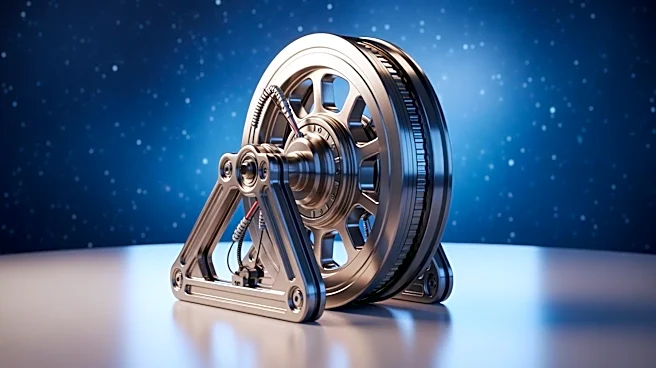
Ryan Schulte, the Orion flywheel project manager at NASA's Johnson Space Center, has led the development of a compact exercise device used by astronauts on the Artemis II mission. The flywheel, about the size of a large shoebox, provides a range of aerobic
and resistive workouts without requiring electrical power. This device was crucial for maintaining the physical and mental health of the crew during their 694,481-mile journey around the Moon. The flywheel allows astronauts to perform various exercises such as squats, deadlifts, and aerobic rowing, which are essential in counteracting the effects of microgravity on muscles and bones. Schulte's team faced challenges like limited space and the need to minimize noise, but successfully integrated the device into the spacecraft, allowing astronauts to exercise for about 30 minutes daily.
Why It's Important?
The development of the flywheel is significant as it addresses the critical need for maintaining astronaut health during long-duration space missions. In microgravity, astronauts experience muscle and bone atrophy, which can lead to serious health issues. The flywheel helps mitigate these effects, ensuring that astronauts remain fit for tasks such as lunar spacewalks and emergency procedures. Additionally, the psychological benefits of exercise, such as stress relief and improved mental clarity, are vital for the well-being of astronauts living in confined spaces. As NASA plans more extended missions, such as those to Mars, the flywheel and similar devices will be integral to mission success and crew safety.
What's Next?
With the success of the flywheel on Artemis II, NASA plans to develop a fleet of more reusable exercise devices for future Artemis missions. These devices will be crucial as missions become longer and more complex, requiring astronauts to maintain peak physical condition. The continued innovation in exercise technology will support NASA's goals of sustainable lunar exploration and eventual human missions to Mars. Schulte's work will likely influence the design of exercise equipment for these future missions, ensuring that astronauts can perform necessary physical activities in space.