
What's Happening?
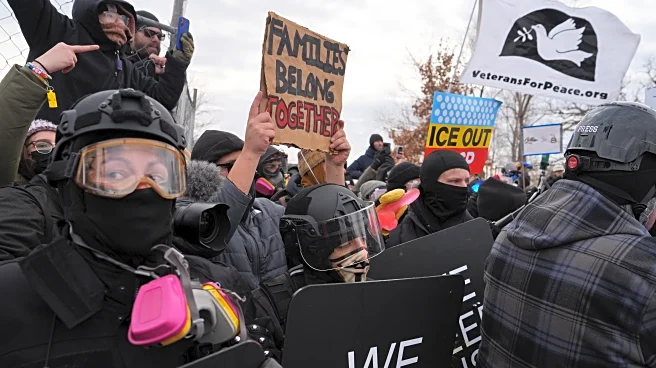
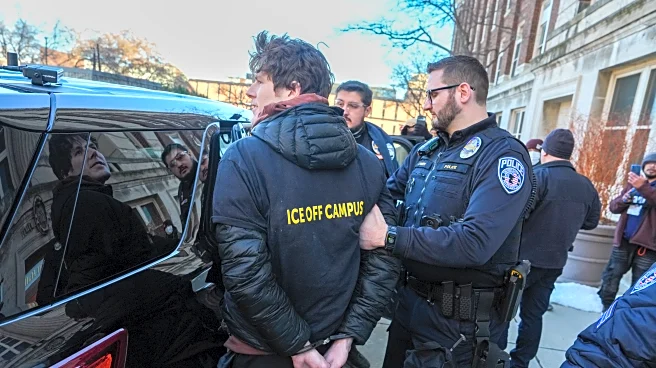
A federal judge has issued a ruling preventing Immigration and Customs Enforcement (ICE) agents from retaliating against protesters in Minnesota. This decision comes in the wake of ongoing protests following the death of Renee Good, a Minnesota resident,
which has sparked widespread outrage and calls for accountability. The protests have been fueled by allegations of excessive force used by federal agents, and the ruling is seen as a victory for civil rights advocates. The case has drawn significant attention, with the American Civil Liberties Union (ACLU) playing a key role in the legal battle.
Why It's Important?
This ruling is significant as it underscores the tension between federal law enforcement agencies and local communities, particularly in the context of immigration enforcement. The decision to block retaliation against protesters is a critical affirmation of First Amendment rights, setting a precedent for how similar cases might be handled in the future. It also highlights the ongoing debate over the role of ICE and its impact on community safety and civil liberties. The outcome of this case could influence public perception of federal law enforcement and shape future policy decisions regarding immigration and protest rights.
What's Next?
The legal battle is expected to continue, with further court hearings and potential appeals. The state of Minnesota and the city of Minneapolis have filed a federal lawsuit challenging the federal government's actions, which could lead to more legal scrutiny of ICE's operations. Additionally, the protests are likely to persist, keeping the issue in the public eye and potentially influencing legislative action at both the state and federal levels. The situation remains fluid, with potential implications for the broader national conversation on immigration and civil rights.