






What's Happening?
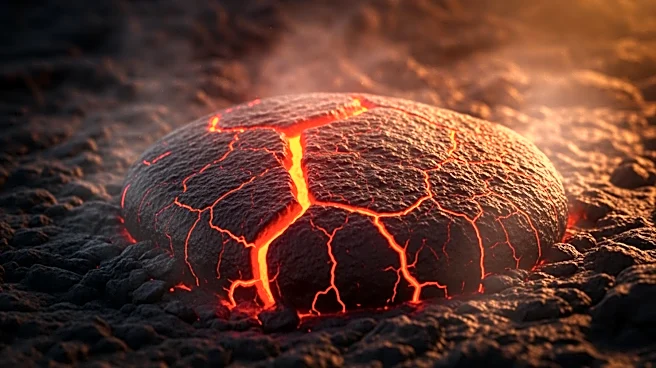
Campi Flegrei, a volcanic caldera near Naples, Italy, is reportedly nearing a critical transition point, according to a new study. The caldera, which is home to approximately 500,000 people, has shown increased seismic activity and ground uplift over
the past decades. Researchers have observed that the acceleration of these activities is itself accelerating, suggesting that a significant geological change could occur between 2030 and 2034. The study, led by Davide Zaccagnino, indicates that the movement of deep magmatic fluids is fracturing and uplifting the caldera's crust. However, it remains uncertain whether this transition will result in an eruption or another form of geological change.
Why It's Important?
The potential eruption of Campi Flegrei poses a significant risk to the densely populated area surrounding the caldera. An eruption could have devastating effects on local communities, infrastructure, and the environment. The study's findings highlight the importance of continuous monitoring and preparedness for volcanic activity in the region. Understanding the behavior of Campi Flegrei is crucial for emergency management agencies to develop effective response strategies. The research also contributes to the broader understanding of volcanic systems and their potential to undergo rapid changes, which could inform similar studies worldwide.
What's Next?
Researchers are working on a system to update activity predictions for Campi Flegrei every few months, based on the latest seismic and uplift data. This system aims to provide a continuous record of forecasts to assist emergency management agencies in planning and response efforts. While the study does not predict an exact date for a potential eruption, it emphasizes the need for vigilance and preparedness. Authorities and scientists will likely continue to monitor the caldera closely, and further research may provide more insights into the volcano's behavior and potential risks.