









What's Happening?
Ukraine and Croatia are collaborating on drone production, with a focus on establishing underground manufacturing facilities. Croatian drone technology company ORQA and Ukrainian manufacturer General Cherry have partnered to develop joint production facilities. This
includes an underground factory in Ukraine designed to produce electronic components and communications equipment for unmanned aircraft. A parallel facility in Croatia is planned for the serial production of jointly developed interceptor drones and counter-drone systems, some of which are intended for NATO customers. This initiative is driven by Ukraine's experience in maintaining weapons production under sustained Russian attacks, which has highlighted the vulnerabilities of conventional factory networks to long-range precision strikes. The partnership aims to combine Ukrainian operational knowledge with European manufacturing capacity while ensuring continued supply to Ukrainian forces.
Why It's Important?
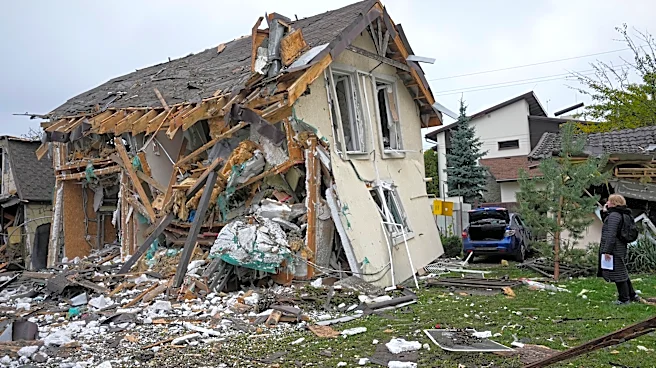
This partnership is significant because it introduces a new model for wartime production resilience that could influence NATO's industrial strategies. European defense manufacturing has traditionally relied on large, centralized facilities optimized for efficiency, but these are highly vulnerable to modern warfare tactics, as demonstrated by Russia's attacks on Ukrainian industrial targets. Ukraine's approach of dispersed, relocated, and even underground production offers valuable lessons for Western defense manufacturers. By reducing dependence on imported components, particularly those from Chinese manufacturing networks, the initiative addresses critical supply chain vulnerabilities. This local manufacturing also shortens supply chains and allows for quicker equipment modifications in response to operational needs, enhancing the agility and self-sufficiency of defense industries. The collaboration underscores a shift where Ukraine is not merely a recipient of military aid but also a contributor of technical knowledge and production methods relevant to European rearmament.
What's Next?
The facilities in Ukraine and Croatia are currently under development, and their eventual output, cost, and delivery schedules are yet to be independently established. However, the partnership signals a change in the direction of defense-industrial cooperation, with potential implications for NATO procurement and investment. The proposed Croatian facility could provide additional manufacturing capacity for NATO customers, while Ukrainian production would support domestic requirements and reduce reliance on vulnerable import routes. NATO governments will likely assess whether the lessons learned from Ukraine's wartime industry, particularly regarding production resilience, will influence their own defense planning and investment strategies before European factories face similar threats. The focus will be on balancing manufacturing capacity and procurement costs with the ability to sustain production under attack.
Beyond the Headlines
The development of underground and dispersed manufacturing facilities highlights a deeper strategic shift in defense planning, moving beyond mere production volume to prioritize resilience against sophisticated attacks. This approach acknowledges that in a high-intensity conflict, the ability to continue manufacturing under duress is as crucial as the initial production capacity. It also raises ethical and logistical considerations, such as the increased costs associated with duplicated equipment, enhanced security, and the complex requirements for underground operations like ventilation and worker safety. Furthermore, the partnership challenges the traditional donor-recipient dynamic, positioning Ukraine as an innovator in defense industrial practices. This could foster greater integration of Ukrainian defense industries into the broader European defense ecosystem, potentially leading to long-term shifts in how alliances approach shared security and industrial self-reliance.