





What's Happening?
Rep. Jamie Raskin (D-Md.) has characterized scrutiny of far-left streamer Hasan Piker's controversial statements, including his assertion that he would vote for Hamas over Israel, as an 'irrelevant distraction.' This dismissal occurred during an interview
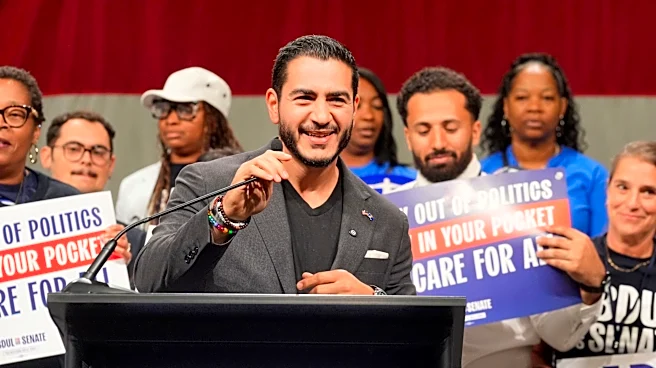
on NBC's 'Meet the Press,' where Raskin was questioned about Democratic divisions concerning Michigan Senate nominee Abdul El-Sayed's association with Piker. Raskin stated that 'nobody supports Hamas, a terrorist organization which brutally attacked Israel on Oct. 7.' Piker, who endorsed El-Sayed and appeared at his campaign events, reiterated his comparison between Hamas and Israel during an April appearance on 'Pod Save America,' stating, 'I would vote for Hamas over Israel every single time.' He has also faced criticism for comments regarding American Jews, suggesting that if they continue to present themselves as 'singularly invested in Israel,' someone could 'take action' against them. El-Sayed has resisted calls to disavow Piker, aiming to engage Piker's millions of listeners in the electoral process.
Why It's Important?
This situation highlights a growing ideological rift within the Democratic Party, particularly concerning its approach to engaging with controversial figures and their audiences. The Republican National Committee (RNC) has seized on Piker's influence, with National Press Secretary Natalie Baldassarre warning that his support for socialist candidates could become a liability for the party in upcoming elections. Baldassarre stated that 'The Democrat Party is being driven off [a] cliff by socialists who are driving blindfolded while arguing about the view.' This suggests that the RNC intends to use these associations to portray the Democratic Party as increasingly radicalized, potentially alienating moderate voters. The debate also underscores the challenges political campaigns face in balancing outreach to diverse audiences with maintaining a clear stance on sensitive international issues, especially in an era where online personalities wield significant influence.
What's Next?
The debate surrounding Hasan Piker's rhetoric and his ties to Democratic candidates is likely to intensify as the November elections approach. The RNC will likely continue to highlight these connections to criticize the Democratic Party, forcing more candidates to address their positions on such associations. Democratic leaders and candidates will need to navigate how to engage with a broad spectrum of voters, including those influenced by figures like Piker, without alienating other segments of their base or appearing to endorse controversial views. This could lead to further internal discussions within the Democratic Party about its messaging and the types of alliances it is willing to forge. The ongoing scrutiny will also test the ability of candidates like Abdul El-Sayed to maintain support while resisting calls to fully disavow controversial figures.
Beyond the Headlines
The controversy surrounding Hasan Piker and his influence on Democratic politics points to a broader shift in political engagement, where online streamers and social media personalities are becoming significant, albeit sometimes polarizing, voices. This development challenges traditional political campaign strategies and raises questions about the responsibility of political parties to vet the views of those they associate with, even indirectly. The ethical dimension involves the balance between freedom of speech and the potential for inflammatory rhetoric to impact political discourse and public perception. Furthermore, the situation highlights the increasing difficulty for political parties to control narratives in a fragmented media landscape, where online personalities can bypass traditional gatekeepers and directly influence millions. This trend could lead to a re-evaluation of how political campaigns engage with digital influencers and manage the implications of such associations.