


What's Happening?
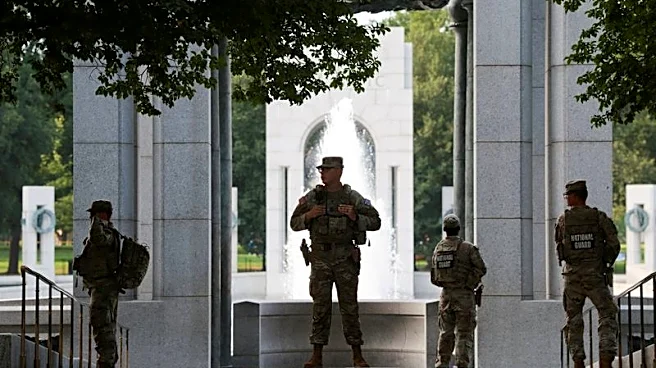
President Trump claimed that vandals were responsible for large areas of dead grass on the National Mall near the World War II Memorial. This area is the same location where a stage was built and crowds gathered for his July 4 celebration. President Trump made
this accusation in a social media post, without providing evidence, despite photos from the time showing a large bandstand and seating areas covering the lawn, and subsequent images revealing brown, damaged grass after the structures were removed. He also referenced a photo he posted on August 1, showing the numbers '86 47' emblazoned in the grass, which federal officials consider a threat against him, as further evidence of vandalism. President Trump stated, 'There may have been some contractor difficulty, but the major damage was caused by VANDALS!' This follows previous instances where President Trump blamed vandals for damage to renovation projects, often contradicting official findings, such as the Lincoln Memorial Reflecting Pool damage, which U.S. Attorney Jeanine Pirro's office concluded was due to poor construction.
Why It's Important?
President Trump's repeated accusations of vandalism, particularly when official reports or photographic evidence suggest alternative explanations, highlight a pattern of narrative control and deflection. By attributing damage to malicious acts rather than logistical consequences of large events or construction issues, he attempts to shift blame and maintain a specific public image. This approach can undermine the credibility of official investigations and create distrust in factual reporting. The focus on 'vandals' also serves to rally his base against perceived enemies and reinforce a sense of victimhood. This dynamic impacts public understanding of events, potentially leading to a polarized interpretation of facts and a diminished capacity for objective assessment of government actions and their consequences.
What's Next?
It is likely that President Trump will continue to use social media to present his interpretations of events, especially those that could reflect negatively on his administration or public image. The National Park Service or other relevant authorities may issue further statements or reports regarding the condition of the National Mall, potentially contradicting President Trump's claims. This incident will likely contribute to ongoing debates about the use of public spaces for political events, the responsibility for their upkeep, and the transparency of official explanations for damage or incidents. The broader implications for how public property is managed and how information is disseminated during politically charged events will remain a point of discussion.
Beyond the Headlines
This incident touches upon the broader issue of truth and narrative in public discourse, particularly in the context of political leadership. President Trump's consistent tendency to attribute negative outcomes to external, often malicious, forces rather than internal factors or foreseeable consequences raises questions about accountability and the nature of political communication. The use of social media to disseminate these claims directly to the public, bypassing traditional media gatekeepers, further complicates the landscape of information. This approach can create an 'alternative facts' environment where official reports and photographic evidence are dismissed in favor of politically convenient narratives. The long-term impact on public trust in institutions, both governmental and journalistic, and the ability of citizens to engage with a shared understanding of reality, is a significant concern.