
What's Happening?
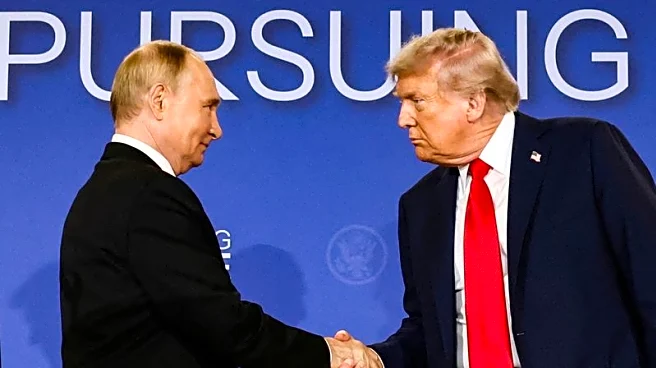
President Donald Trump has signed the founding charter of the 'Board of Peace' during the World Economic Forum in Davos. This new international organization is intended to work alongside the United Nations
to address global conflicts. Trump described the board as potentially the most consequential in history, emphasizing its role in demilitarizing and rebuilding conflict zones like Gaza. The board's membership, which includes controversial figures such as Russian President Vladimir Putin, has sparked debate. The initiative aims to involve various global leaders, including Israeli Prime Minister Benjamin Netanyahu and Hungarian Prime Minister Viktor Orban, with an invitation extended to Pope Leo XVI. The board's establishment comes with a significant financial commitment, requiring a $1 billion membership fee.
Why It's Important?
The creation of the 'Board of Peace' signifies a major diplomatic effort by President Trump to influence global conflict resolution. By working in conjunction with the United Nations, the board could potentially streamline international peace efforts and provide a new platform for dialogue among world leaders. The inclusion of figures like Putin, who has been involved in the Ukraine conflict, highlights the board's controversial nature and the challenges it may face in gaining widespread acceptance. The initiative could reshape international relations by offering a new avenue for conflict resolution, potentially impacting U.S. foreign policy and its role in global peacekeeping efforts.
What's Next?
The next steps for the 'Board of Peace' involve solidifying its membership and operational framework. As the board begins its work, it will likely face scrutiny from international observers and stakeholders who question its effectiveness and the motivations behind its formation. The board's ability to mediate conflicts and its relationship with existing international bodies like the UN will be critical in determining its success. Reactions from global leaders and organizations will shape the board's future, influencing its strategies and priorities in addressing international conflicts.