




What's Happening?
Police Commissioner Danny Levy met with representatives of Israel's LGBTQ+ community to discuss security measures for the upcoming Pride Month events. Levy emphasized the police's commitment to safeguarding participants' rights to celebrate freely and
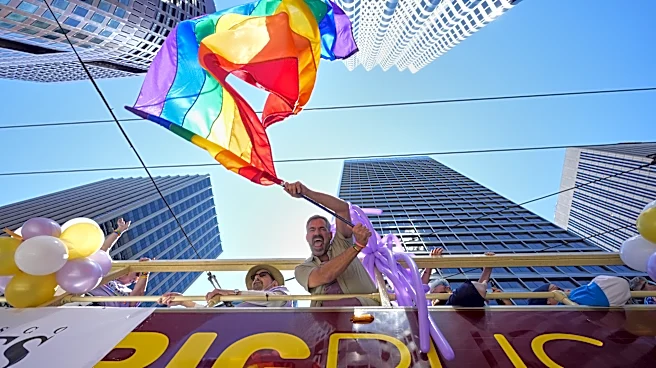
without fear. The Tel Aviv Pride Parade, scheduled for June 12, will return to its traditional format after being canceled in 2025. The parade will follow its usual route along the Shlomo Lahat Promenade, concluding at Charles Clore Park. The Pride Land festival at the Dead Sea will kick off the celebrations on June 1, featuring cultural and arts complexes, relaxation areas, and family-focused programming. Organizers aim to create a multigenerational 'Pride City' rather than just a large-scale party. The events occur amid international tensions, highlighted by the exclusion of the Jewish LGBTQ+ organization Keshet Italia from the Rome Pride parade.
Why It's Important?
The meeting between Police Commissioner Levy and LGBTQ+ leaders underscores the importance of ensuring safety and freedom of expression during Pride Month. These events are significant for the LGBTQ+ community, providing visibility and a platform for advocacy. The return to traditional formats for the Tel Aviv Pride Parade and the Pride Land festival reflects resilience and solidarity amid international scrutiny. The exclusion of Keshet Italia from the Rome Pride parade highlights ongoing geopolitical tensions affecting LGBTQ+ organizations. The police's commitment to protecting these events is crucial for maintaining public order and supporting minority rights, which can influence broader societal attitudes towards inclusivity and diversity.
What's Next?
As Pride Month progresses, the focus will be on maintaining security and ensuring peaceful celebrations. The police will likely continue to liaise with LGBTQ+ community leaders to address any emerging concerns. The international response to Israel's Pride events, particularly in light of the Rome Pride exclusion, may prompt further discussions on the intersection of LGBTQ+ rights and geopolitical issues. Organizers will aim to foster a safe and inclusive environment, potentially influencing future Pride events in other regions. The success of these events could strengthen the community's advocacy efforts and promote broader acceptance and equality.
Beyond the Headlines
The Pride Month celebrations in Israel are not only a cultural event but also a statement of resilience against international criticism. The exclusion of Keshet Italia from the Rome Pride parade raises questions about the intersection of LGBTQ+ rights and political stances. This situation may lead to discussions on how LGBTQ+ organizations navigate geopolitical tensions while advocating for their rights. The emphasis on creating a 'Pride City' reflects a shift towards more inclusive and diverse celebrations, potentially setting a precedent for future events. These developments highlight the ongoing challenges and opportunities for LGBTQ+ advocacy in a complex global landscape.