

What's Happening?
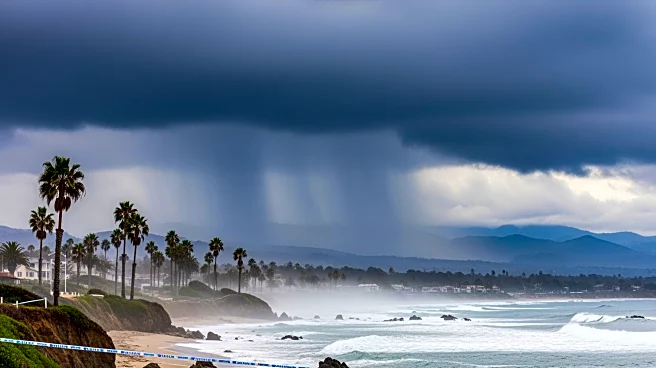
The Los Angeles area experienced drizzly conditions on Thursday morning, with a band of showers moving across western L.A. County. According to Rich Thompson, a meteorologist with the National Weather Service in Oxnard, the rainfall totals amounted to just
a fraction of an inch, with a slight chance of showers continuing into the afternoon and evening. Despite the light rainfall, the region has seen a significant amount of rain since the start of the water year on October 1. Downtown Los Angeles has recorded its wettest start to the water year since 2011, and the fourth-wettest since records began in 1877. Other areas such as Lancaster, Sandberg, Camarillo, Oxnard, and Santa Barbara have also experienced record rainfall. More than 14 inches of rain have fallen on downtown L.A. since October, nearly matching the city's typical annual rainfall.
Why It's Important?
The recent rainfall has had a significant impact on California's drought conditions. For the first time in 25 years, the state is reporting zero areas of abnormal dryness, according to the U.S. Drought Monitor. This marks a major shift in the state's water resources, which have been under strain due to prolonged drought conditions. The increased rainfall has replenished water supplies and improved conditions for agriculture and water management. However, the heavy rains also pose challenges, such as potential flooding and infrastructure strain. The shift from drought to wet conditions highlights the variability of California's climate and the need for adaptive water management strategies.
What's Next?
With conditions expected to dry up by Friday and remain dry through the end of the month, the focus will likely shift to managing the water resources accumulated during this wet period. State and local agencies may need to assess infrastructure resilience and prepare for potential future weather extremes. The transition from drought to wet conditions could also influence policy discussions around water conservation and climate adaptation strategies. Stakeholders, including farmers, urban planners, and environmental groups, will be closely monitoring the situation to ensure sustainable water use and management.