



What's Happening?
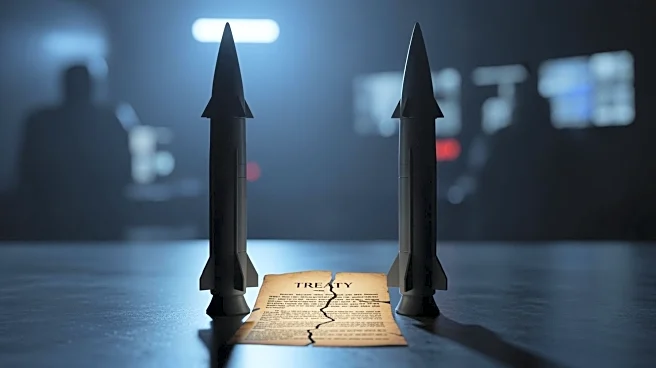
The New START treaty, a key nuclear arms control agreement between the United States and Russia, is set to expire, marking the end of a significant era in nuclear arms control. President Trump has decided not to renew the treaty, despite previously acknowledging
its importance. The New START treaty, in effect since 2011, limited the number of strategic nuclear weapons and included verification measures to ensure compliance. Its expiration could lead to a new arms race between the U.S. and Russia, as both nations will be free to expand their nuclear arsenals. The treaty's lapse comes amid geopolitical tensions and a lack of interest from the Trump administration in pursuing further arms control agreements.
Why It's Important?
The expiration of the New START treaty could destabilize global security by removing constraints on the nuclear arsenals of the world's two largest nuclear powers. Without the treaty, there is a heightened risk of a renewed arms race, which could increase geopolitical tensions and the likelihood of nuclear conflict. The decision not to renew the treaty reflects a broader shift in U.S. policy under President Trump, who has surrounded himself with advisors skeptical of arms control agreements. This development could undermine decades of progress in nuclear disarmament and arms control, potentially leading to increased military spending and a more volatile international security environment.
What's Next?
With the treaty's expiration, both the U.S. and Russia may begin expanding their nuclear arsenals, potentially prompting other nuclear-armed states to follow suit. The lack of a formal agreement could lead to increased mistrust and reduced transparency between the two nations. The international community may call for renewed diplomatic efforts to establish a new framework for nuclear arms control. However, achieving a new agreement could be challenging, given the current geopolitical climate and the Trump administration's stance on arms control. The situation may also influence future U.S. administrations to prioritize arms control in their foreign policy agendas.