







What's Happening?
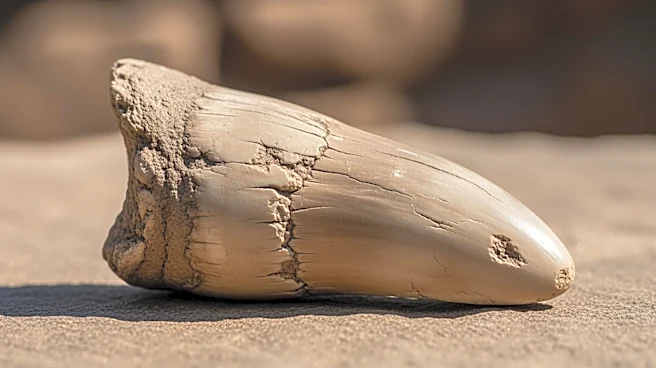
A recent study published in the Journal of Human Evolution suggests that Neanderthals used rhinoceros teeth as tools during the Middle Paleolithic period. Researchers found markings on fossilized rhino teeth in caves in Spain and France, indicating human
activity. The study, led by Alicia Sanz-Royo, involved dental microwear analysis to confirm that the marks were made post-mortem. The hardness of rhino teeth, due to their high hydroxyapatite content, made them suitable for tool use. The study involved recreating Neanderthal tools from modern rhino teeth to test their utility.
Why It's Important?
This discovery provides new insights into Neanderthal behavior and their use of available resources. It challenges previous assumptions about their technological capabilities and suggests a level of strategic thinking in their tool-making processes. Understanding Neanderthal tool use helps anthropologists and archaeologists better comprehend the cognitive abilities and adaptability of early human species. This research contributes to the broader narrative of human evolution and the development of technology.
Beyond the Headlines
The study highlights the potential for Neanderthals to have engaged in complex decision-making processes, such as selecting specific materials for tool-making based on their properties. This finding may prompt further research into other unconventional materials used by Neanderthals and their implications for understanding human evolution. The use of rhino teeth also suggests a broader ecological knowledge and interaction with their environment.