





What's Happening?
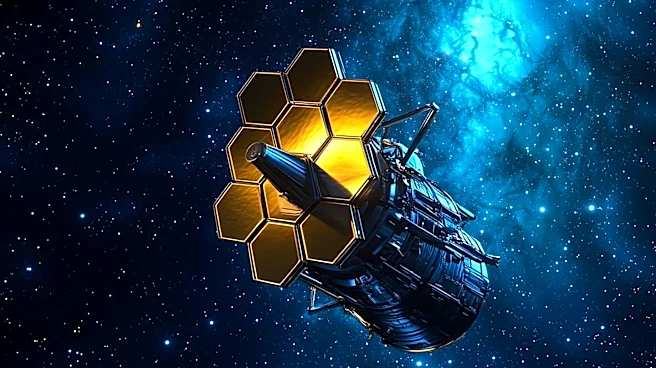
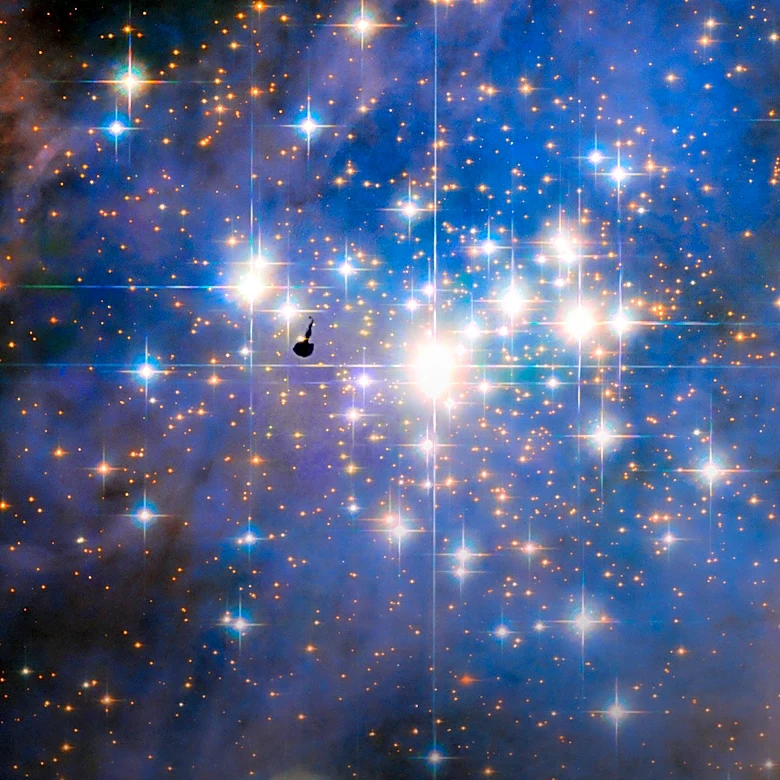
The James Webb Space Telescope (JWST) marks its fourth anniversary, showcasing a collection of its most breathtaking images. Since its launch, the $10 billion NASA/ESA/CSA telescope has provided groundbreaking scientific insights, capturing images that
blend scientific value with aesthetic beauty. Among the highlights are images of the Carina Nebula, the Pillars of Creation, and the Cartwheel Galaxy, each revealing intricate cosmic details. The telescope's ability to capture images at different wavelengths has allowed scientists to uncover previously unseen aspects of the universe, such as the star-forming regions in the Tarantula Nebula and the atmospheric details of planets like Jupiter and Uranus.
Why It's Important?
The JWST's images are not only visually stunning but also scientifically significant, offering new insights into the formation and evolution of cosmic structures. By capturing high-resolution images of distant galaxies and nebulae, the telescope helps astronomers understand the processes that govern star formation and galaxy evolution. The data collected by JWST is crucial for advancing our knowledge of the universe, potentially leading to discoveries about the origins of galaxies and the conditions that led to the formation of stars and planets. The telescope's ability to peer through interstellar dust and gas provides a clearer view of the cosmos, enhancing our understanding of the universe's history and structure.