







What's Happening?
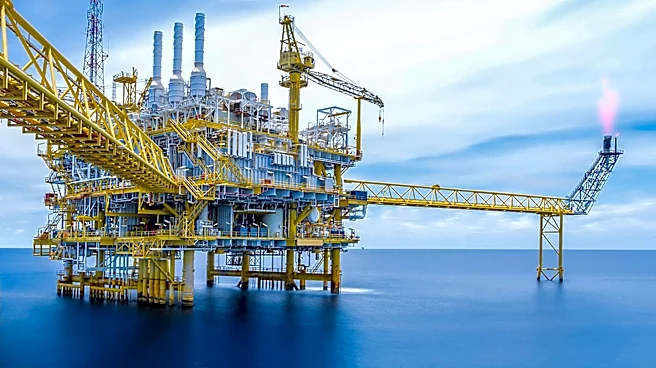
NJ Ayuk, Executive Chairman of the African Energy Chamber (AEC), has called on African governments to significantly increase oil and gas exploration and production. Speaking at African Energy Week (AEW), Ayuk advocated for an 'all-of-the-above' energy
strategy, integrating oil, gas, and renewables to meet the continent's growing energy demands and combat widespread energy poverty. He stressed that Africa should resist external pressures to leave its hydrocarbon resources undeveloped, especially when millions lack reliable electricity. Ayuk highlighted that energy poverty is not a climate strategy and deprivation is not development, urging policies that reflect Africa's unique development priorities. He projected Africa's hydrocarbon production to reach 11 million barrels of oil equivalent per day in 2026, increasing to 12.5 million barrels by 2030, with Nigeria, Algeria, Angola, Libya, and Egypt as major contributors. Ayuk also emphasized the importance of developing electricity grids, pipelines, and factories to support industrialization and improve living standards.
Why It's Important?
Ayuk's stance underscores a critical divergence in energy policy between African nations and some Western governments. His argument that Africa should not be asked to forgo its natural resources for climate goals, while developed nations continue to utilize fossil fuels, highlights a perceived double standard. This perspective is significant for global energy markets and climate negotiations, as Africa possesses substantial untapped hydrocarbon reserves. Increased African oil and gas production could alter global supply dynamics, potentially impacting energy prices and geopolitical alliances. Furthermore, the call for domestic financing mechanisms, such as the planned Africa Energy Bank, aims to reduce reliance on external capital, which has become increasingly constrained for fossil fuel projects. This shift could empower African nations to control their energy future and accelerate industrialization, but it also poses challenges for international climate efforts seeking to transition away from fossil fuels globally.
What's Next?
Following Ayuk's call, African governments may intensify efforts to attract investment in their oil and gas sectors, potentially through regulatory reforms and fiscal incentives. Countries like South Africa are urged to address legislative obstacles to develop petroleum resources in areas like the Orange Basin. The proposed Africa Energy Bank, supported by the African Petroleum Producers’ Organization (APPO) and the African Export-Import Bank (Afreximbank), is expected to advance as a key financing mechanism for energy projects across the continent. This initiative could lead to increased domestic funding for oil and gas, reducing dependence on international lenders. Additionally, there may be a push for greater cooperation among African countries and with other Global South nations, such as Venezuela and Grenada, to foster energy partnerships and investment. This could lead to new agreements with international oil companies in underexplored regions like Sierra Leone, Liberia, and The Gambia.
Beyond the Headlines
The debate over Africa's fossil fuel development extends beyond immediate economic gains, touching upon profound ethical and equity considerations. Ayuk's argument challenges the notion that developing nations should bear a disproportionate burden of climate action, especially when their historical contribution to global emissions is minimal. This raises questions about climate justice and the right to development for countries grappling with energy poverty. The push for increased domestic refining capacity, exemplified by the Dangote Petroleum Refinery, signifies a broader strategy to add value to natural resources locally, fostering industrialization and reducing reliance on imported finished products. This approach could lead to significant economic transformation but also necessitates careful management of environmental impacts. The criticism of xenophobia in South Africa by Ayuk also highlights the interconnectedness of economic development, regional cooperation, and social stability, emphasizing that a collaborative environment is crucial for the energy industry's growth.