




What's Happening?
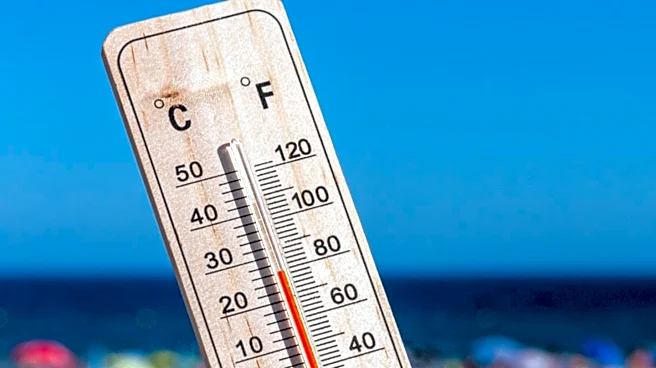
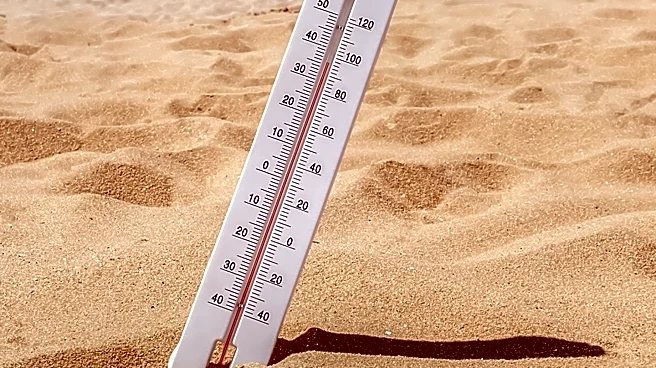
Germany is currently experiencing an unprecedented heatwave, with temperatures reaching record highs. On June 27, 2026, the town of Möckern-Drewitz in eastern Germany recorded a new national high of 41.5°C (106.7°F), surpassing the previous record set
the day before in Saarbrücken. The extreme heat has caused significant strain on public infrastructure, including buckling roads and swelling train tracks, leading to disruptions in transportation services. Deutsche Bahn, Germany’s national rail operator, has offered free cancellations for long-distance travel bookings due to the extreme heat. Additionally, outdoor events such as the Ironman European Championship triathlon in Frankfurt have been affected, with courses being shortened. Authorities have issued extreme heat warnings and are urging citizens to conserve water and take precautions against the intense heat.
Why It's Important?
The heatwave in Germany highlights the growing impact of climate change on infrastructure and public services. The record-breaking temperatures are not only causing immediate disruptions in transportation and public events but also pose long-term challenges for urban planning and resource management. The strain on infrastructure, such as roads and railways, underscores the need for climate-resilient designs and materials. Furthermore, the heatwave's impact on public health and safety, with authorities urging water conservation and caution, reflects the broader societal implications of extreme weather events. This situation serves as a critical reminder of the urgent need for comprehensive climate action and adaptation strategies to mitigate the effects of global warming.
What's Next?
As the heatwave continues, Germany is expected to face further challenges in managing its infrastructure and public services. Authorities may need to implement additional measures to ensure public safety and maintain essential services. The situation could prompt a reevaluation of current infrastructure resilience and lead to increased investment in climate adaptation projects. Additionally, the ongoing heatwave may influence public opinion and policy discussions on climate change, potentially accelerating efforts to reduce carbon emissions and enhance sustainability initiatives. The response to this crisis will likely involve collaboration between government agencies, businesses, and civil society to address both immediate and long-term impacts.