


What's Happening?
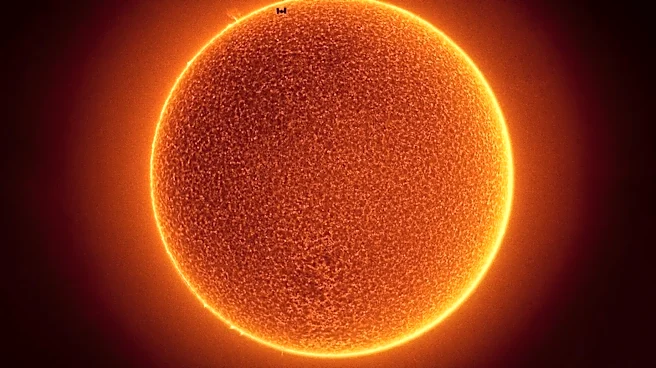
The term 'transit' in astronomy has multiple meanings, with the primary definition referring to an event where one celestial body passes visibly across the face of a larger one, partially blocking it from view. This differs from an occultation, where most
or all of the background object is covered. Examples include a planet crossing the Sun's disk or a moon moving across a planet. The second meaning of transit describes the moment a celestial object crosses the local meridian in the sky, such as the Sun reaching its highest point at solar noon, which was historically crucial for timekeeping and navigation. The third meaning, known as a star transit, involves a star's passage across a telescope's eyepiece field, used for precise star positioning and refining local latitude and longitude. The primary definition of transit requires precise alignment between the observer and the two celestial bodies, making these events relatively uncommon but predictable. They are particularly important in planetary astronomy for revealing orbital motion, size, and atmospheric properties.
Why It's Important?
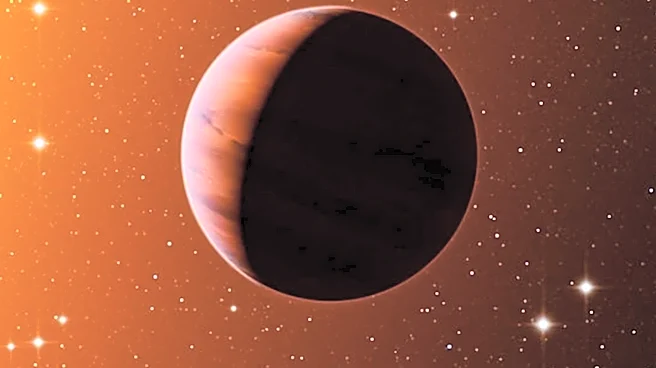
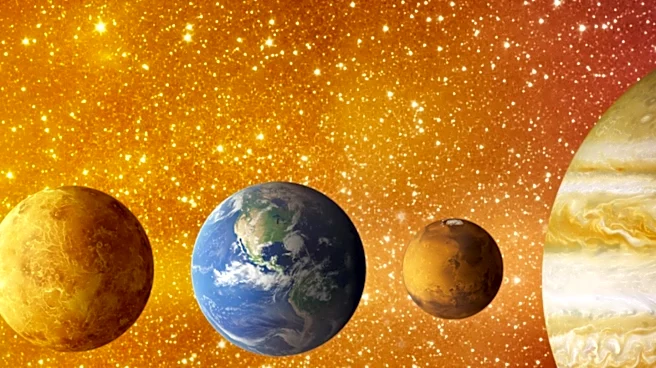
Astronomical transits, particularly the primary definition, hold significant importance in modern astronomy, especially for exoplanet discovery. When a distant planet transits its host star from Earth's perspective, it causes a slight, measurable dip in the star's brightness. By analyzing these repeated dips, astronomers can detect planets, estimate their sizes, and determine their orbital periods. This method has revolutionized the search for planets outside our solar system. Furthermore, observing transits of Mercury and Venus across the Sun allows astronomers to study these planets as tiny dark dots moving across the Sun's brilliant face, providing valuable data. While Mercury transits occur about 13-14 times per century, Venus transits are much rarer, occurring in pairs separated by eight years, with each pair separated by over a century. These events offer unique opportunities for both professional research and amateur observation, contributing to our understanding of celestial mechanics and planetary characteristics.
What's Next?
The next Mercury Transit is scheduled for November 12, 2032, though it will not be visible from the U.S. The next Venus Transit is a much more distant event, not occurring until December 10, 2117. For those interested in more frequent transit observations, transits involving Jupiter and Saturn and their large moons (Io, Europa, Ganymede, Callisto) occur more often and can be observed with telescopes. Astronomers will continue to utilize transit observations for exoplanet research, refining techniques to detect smaller planets and analyze their atmospheres. The ongoing study of transit data will contribute to a broader understanding of planetary systems beyond our own, potentially identifying exoplanets with conditions suitable for life. Public interest in these celestial events is also likely to continue, with educational institutions and amateur astronomy groups providing resources and viewing opportunities for future transits.
Beyond the Headlines
The study of astronomical transits extends beyond mere observation, touching upon fundamental aspects of physics and our place in the universe. The precise timing and measurement of these events have historically been crucial for navigation and timekeeping, demonstrating humanity's long-standing connection to celestial phenomena. In the modern era, the transit method for exoplanet detection has profound implications for astrobiology, as it allows scientists to identify planets that might harbor liquid water and potentially life. The rarity of certain transits, like those of Venus, underscores the unique celestial mechanics at play and provides a sense of cosmic scale and timing. Furthermore, the development of advanced instrumentation to detect minute changes in stellar brightness during transits highlights the continuous innovation in astronomical technology. The ongoing pursuit of understanding these celestial alignments reflects a deeper human curiosity about the cosmos and the potential for life beyond Earth.