






What's Happening?
Holtec International has submitted its Preliminary Safety Analysis Report (PSAR) to the U.S. Nuclear Regulatory Commission (NRC), completing the second and final part of its construction permit application for two small modular reactors (SMRs), Pioneer
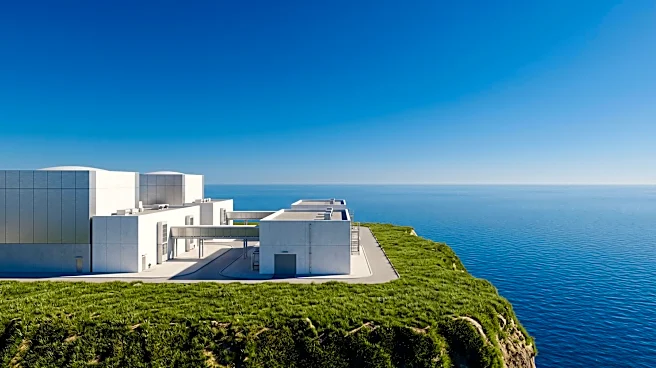
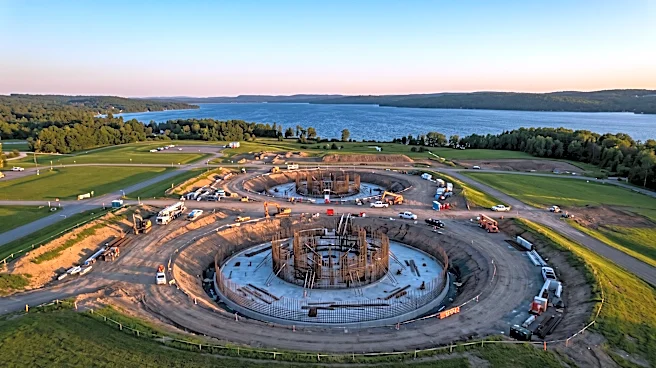
1 and Pioneer 2. These SMRs are planned for the Palisades Energy Campus in Covert Township, southwest Michigan. The two units, utilizing Holtec's SMR-300 design, are projected to generate 680 megawatts of low-carbon electricity for the regional grid. Groundwork has already commenced, with the NRC granting an exemption in late August that permits excavation and soil stabilization activities to proceed before the full limited work authorization is issued. This marks a significant step, moving the project from regulatory paperwork to physical construction. The PSAR submission is a crucial regulatory milestone, transforming the reactor design from a concept into a detailed, reviewable technical case, a process that involved coordinating engineering teams across multiple countries.
Why It's Important?
This development is significant for the U.S. energy landscape as it represents one of the most concrete advancements in the deployment of advanced nuclear technology. The project aims to address the rising electricity demand in the U.S., driven by data centers, reshoring of manufacturing, and the electrification of transportation and heating. While renewable sources like wind and solar are expanding, grid operators require firm, dispatchable, low-carbon power that operates independently of weather conditions, a role nuclear energy can fulfill. The Palisades campus, which previously housed an 805 MW reactor and is undergoing a restart of that unit, is poised to become a multi-asset energy hub. Building new reactors at an existing nuclear site offers practical advantages, including pre-existing grid connections, a trained workforce, established site characterization data, and shared security infrastructure, thereby avoiding many challenges associated with greenfield projects. If completed, the combined campus would provide approximately 1.5 GW of nuclear capacity, significantly contributing to the region's low-emission power supply.
What's Next?
The coming months will be critical in determining the efficacy of the parallel-track approach adopted for this project. Key regulatory milestones are scheduled, including the sign-off on the digital instrumentation and control architecture and the seismic methodology evaluation report in October. Early November is expected to bring the safety evaluation report on the modular construction technique, followed by a draft evaluation related to early site preparation in December. After these steps, the NRC will conduct a full review of the PSAR, leading to a decision on the construction permit itself. While the project shows significant progress, risks remain, particularly concerning the cost, supply chain, and schedule, as first-of-a-kind reactors often encounter unforeseen challenges. The commercial viability of SMRs at scale in the U.S. is yet to be fully proven. However, the ongoing regulatory reviews and the commencement of site work indicate a determined push towards commercial licensing and deployment.
Beyond the Headlines
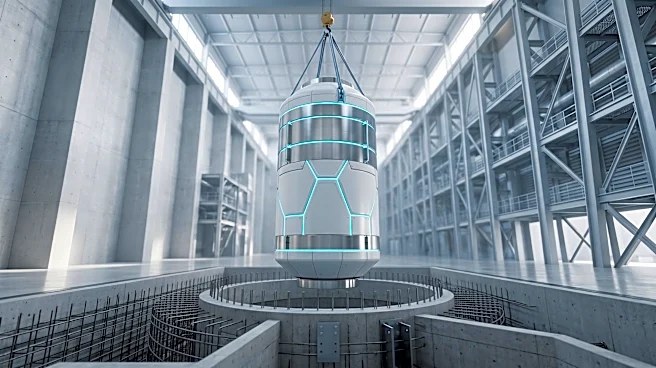
The Holtec International project highlights a broader shift in the nuclear industry towards modular construction techniques. Historically, large, custom-built nuclear reactors have been plagued by cost overruns and delays, as exemplified by projects like Vogtle Units 3 and 4. The SMR concept aims to mitigate these issues by adopting a manufacturing-based approach, where components are built in factories, shipped as modules, and assembled on-site. The NRC's acceptance of Holtec's modular construction technique and its seismic methodology, which allows for standardized deployment across various geological settings, are crucial for realizing the economic benefits of this approach. If successful, this could significantly reduce the cost and timeline for subsequent SMR projects. This initiative also underscores the strategic importance of nuclear power in achieving energy independence and decarbonization goals, particularly as the U.S. grapples with increasing electricity demand and the need for reliable, clean energy sources. The project's success could set a precedent for future advanced nuclear deployments, influencing energy policy and investment in the sector.