



What's Happening?
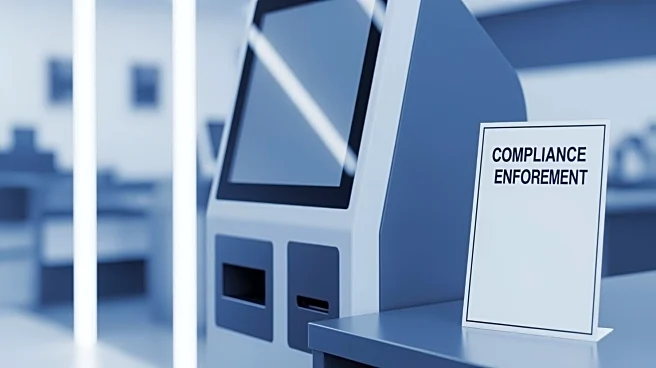
The Costa Mesa City Council has approved a new ordinance that mandates staffing requirements for self-checkout lanes in grocery and retail drug stores. This law, set to take effect on April 20, 2026, requires that each self-checkout station be monitored
by a dedicated employee, with a maximum of three stations per employee. Additionally, a manned checkout line must be available before self-checkout stations can be used. The ordinance aims to enhance public safety, protect employees, and reduce retail theft. Non-compliance will result in fines starting at $100 per day, escalating to $1,000 per day. The United Food and Commercial Workers (UFCW) Local 324 supports the measure, citing benefits for workers and customers, particularly seniors and people with disabilities who may struggle with self-checkout technology.
Why It's Important?
This ordinance represents a significant shift in how retail operations are managed, particularly in the context of increasing automation. By enforcing staffing requirements, the law seeks to balance technological convenience with human oversight, potentially improving customer service and reducing theft. The measure could lead to increased employment opportunities in the retail sector, as stores will need to hire additional staff to comply. However, it also poses challenges for businesses that have relied on self-checkout systems to cut labor costs. The law could influence similar regulations in other regions, as seen with Long Beach's adoption of a similar law and ongoing legislative efforts in Massachusetts.
What's Next?
As the ordinance takes effect, businesses in Costa Mesa will need to adjust their staffing models to comply with the new requirements. This may involve hiring additional employees or reassigning current staff to monitor self-checkout lanes. Retailers will have a 15-day grace period to address any staffing deficiencies before fines are imposed. The response from the business community will be crucial, as some local leaders have expressed concerns about the potential negative impact on business operations and tax revenue. The situation will be closely monitored to assess the law's effectiveness and its impact on both employment and retail theft rates.