






What's Happening?
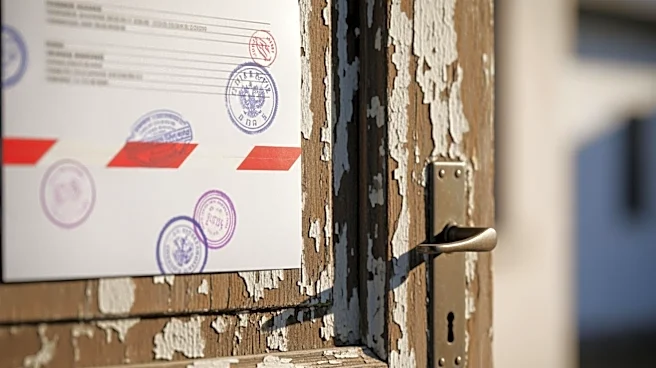
A report by the Common Sense Institute highlights the challenges faced by homeowners in maintaining aging homes due to local bureaucratic hurdles. The median age of owner-occupied homes in the U.S. has increased to 42 years, necessitating essential repairs
to maintain habitability. However, obtaining permits for these repairs can add significant delays and costs, as seen in Arizona where permit processes can extend project timelines by an average of 23 days. This issue is compounded by the high costs of compliance with regulations, such as lead paint removal, which can be prohibitively expensive. The report raises concerns about whether local permitting systems are making it harder to maintain the aging housing stock.
Why It's Important?
The aging housing stock in the U.S. presents a significant challenge as maintenance becomes crucial for safety and livability. The bureaucratic delays and costs associated with obtaining permits for necessary repairs can deter homeowners from undertaking essential maintenance, potentially leading to a deterioration in housing quality. This situation is particularly concerning for low-income homeowners who may struggle to afford these repairs. The broader implication is that without addressing these regulatory hurdles, the U.S. may face a growing backlog of necessary home repairs, impacting the overall housing market and living conditions.
What's Next?
As the housing stock continues to age, there is a pressing need for policy reforms to streamline the permitting process and reduce the financial burden on homeowners. This could involve simplifying permit requirements for routine repairs and providing financial assistance to low-income homeowners. Additionally, there is a need for a coordinated effort at the federal, state, and local levels to address the regulatory challenges and ensure that existing homes remain safe and livable. The findings from Arizona could serve as a model for other states to evaluate and improve their permitting systems.