




What's Happening?
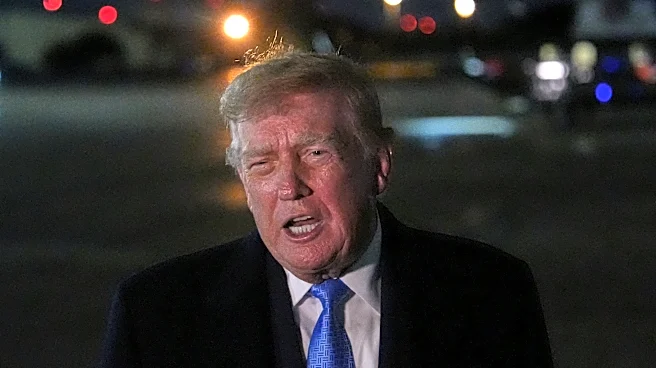
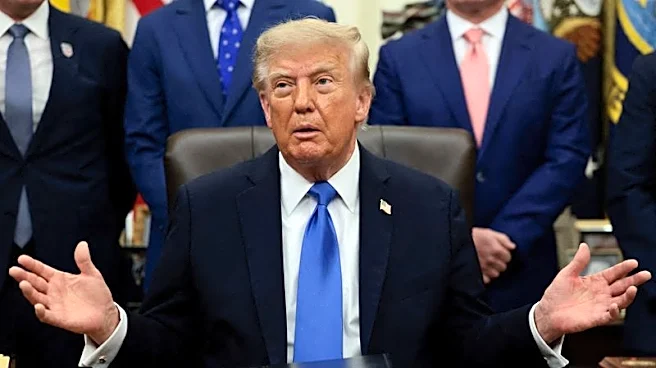
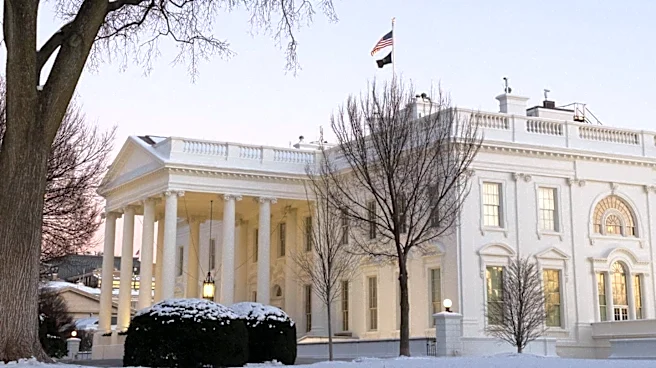
President Donald Trump is scheduled to host a lunch meeting with leaders of prominent artificial intelligence companies at the White House. This gathering comes amidst increasing concerns and warnings from some AI leaders about the potential threats posed
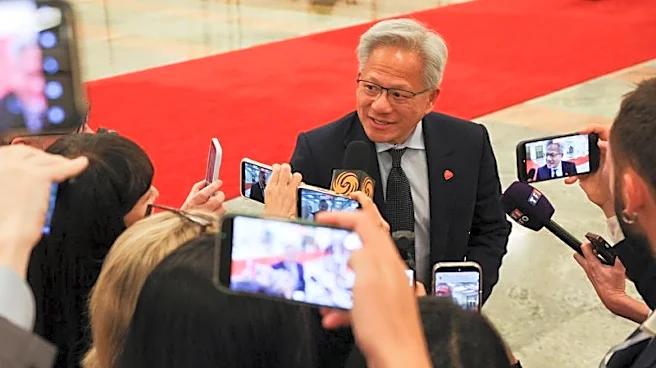
by rapidly advancing AI technology. Attendees are expected to include Meta CEO Mark Zuckerberg, Anthropic CEO Dario Amodei, Google CEO Sundar Pichai, Nvidia's Jensen Huang, and Palantir's Alex Karl. This meeting follows President Trump's recent statements at the United Nations General Assembly, where he indicated the U.S. "rejects" global attempts to regulate AI. He has also dismissed warnings about AI taking over the world as a "hoax." House Speaker Mike Johnson will also be present, emphasizing the companies' responsibility for safety and the government's potential role, while also stressing the importance of maintaining the U.S. competitive edge in AI development.
Why It's Important?
This meeting is significant as it brings together key figures in both government and the burgeoning AI industry to discuss the future of artificial intelligence in the United States. President Trump's stance against global AI regulation and his characterization of dire warnings as a "hoax" signal a potential path toward lighter governmental oversight, contrasting with approaches in other nations like the UK, which is considering a single independent AI oversight body. The administration's focus on maintaining a competitive edge against countries like China suggests that economic and national security interests will heavily influence any policy decisions. The outcome of these discussions could shape the regulatory landscape for AI in the U.S., impacting how companies innovate, deploy, and manage AI technologies, and potentially influencing the global race for AI dominance.
What's Next?
The immediate next step is the lunch meeting itself, where discussions are expected to center on the responsibilities of AI companies regarding safety and the government's role, if any, in regulation. While President Trump has expressed skepticism about the need for regulation, the presence of House Speaker Mike Johnson, who has called for companies to "self-regulate" while also acknowledging the need to avoid losing a competitive edge, suggests a nuanced approach might be explored. The administration's emphasis on preventing a "moratorium on the development of AI" due to national security implications indicates that any future actions will likely prioritize innovation and U.S. leadership in the field. The meeting could set the tone for future policy discussions and potentially lead to further engagements between the government and AI industry leaders.
Beyond the Headlines
Beyond the immediate policy discussions, this meeting highlights a fundamental tension between rapid technological advancement and the calls for ethical and safety considerations. President Trump's dismissal of AI warnings as a "hoax" and a "Chinese psyop" introduces a political dimension to the debate, potentially polarizing public opinion and policy approaches. The U.S. approach, favoring lighter regulation to maintain its lead, could accelerate AI development but also raises questions about the long-term societal impacts and potential risks that some AI leaders have warned about. This stance could also influence international norms and standards for AI, as other nations observe the U.S. strategy. The emphasis on self-regulation places a significant burden on AI companies to proactively address ethical concerns and ensure responsible development, which could lead to varying standards and practices across the industry.