







What's Happening?
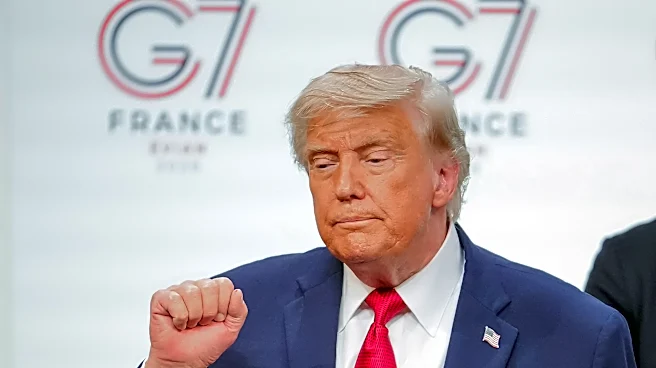
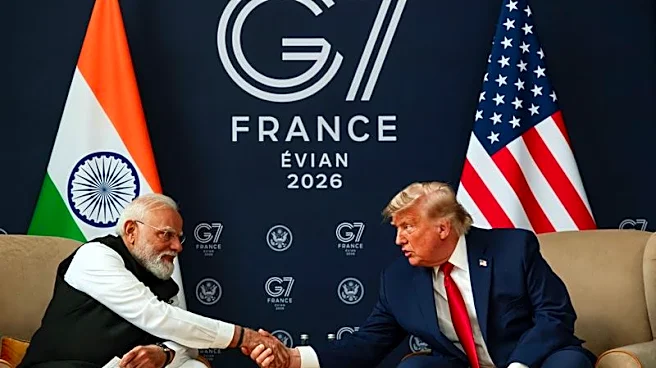
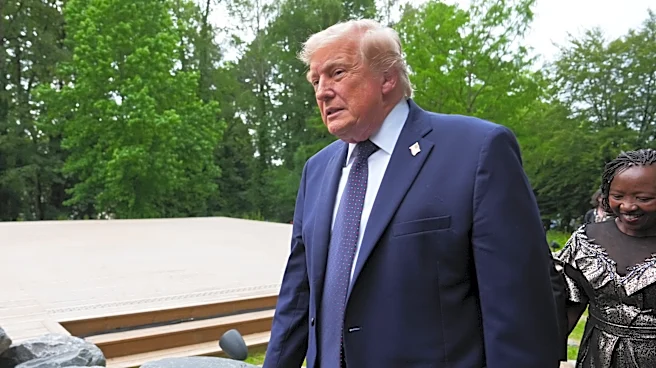
President Trump has signed a framework agreement with Iran to end the ongoing conflict, aiming to restore oil flows through the Strait of Hormuz. The deal, announced during a G7 summit, includes lifting decades of sanctions on Iran, allowing it to rebuild
its economy. Despite the potential economic benefits, Trump's approval ratings have hit record lows, with only 36% of Americans approving of his overall job performance. The agreement has been criticized for its lack of immediate impact on nuclear disarmament and for potentially allowing Iran to strengthen its regional influence.
Why It's Important?
The agreement represents a significant shift in U.S. foreign policy, prioritizing economic engagement over military intervention. While it could stabilize global oil markets and reduce tensions in the Middle East, the deal has been met with skepticism domestically. Trump's handling of the economy and foreign policy has faced criticism, contributing to his declining approval ratings. The deal's success or failure could have far-reaching implications for U.S. political dynamics, particularly in the context of upcoming elections. The international community will closely monitor the situation, as the agreement's impact on regional stability and global security remains uncertain.
What's Next?
The framework agreement sets the stage for further negotiations, with a final deal expected within 60 days. Key issues such as nuclear disarmament and missile programs will be addressed in these talks. The outcome will determine the future of U.S.-Iran relations and the broader geopolitical landscape. Domestically, the agreement may influence voter sentiment and impact the political landscape ahead of the elections. The administration will need to navigate public opinion and address concerns about the deal's effectiveness in achieving long-term peace and security.