


What's Happening?
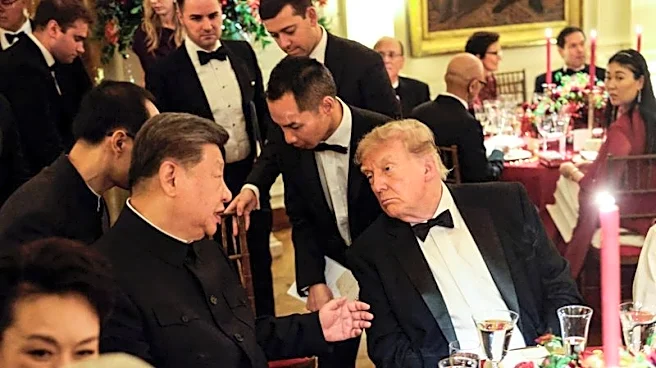
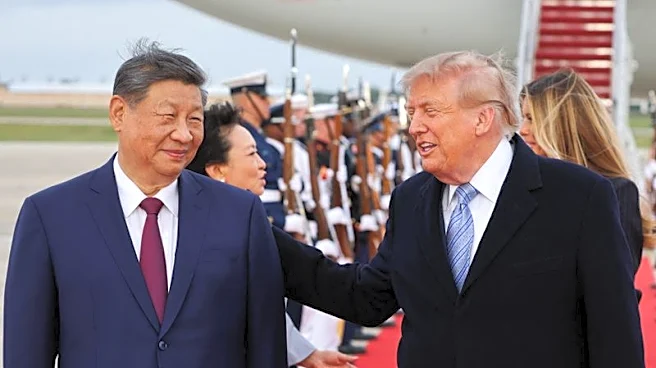
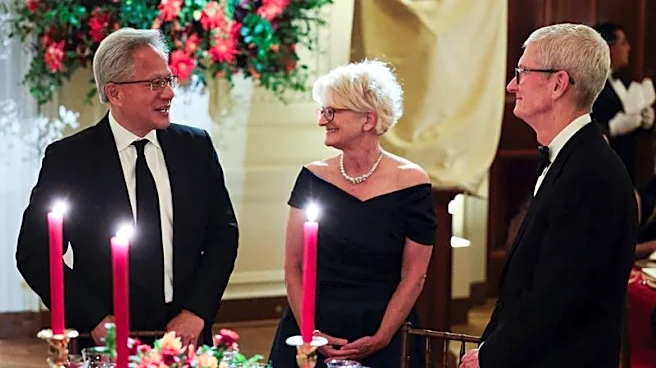
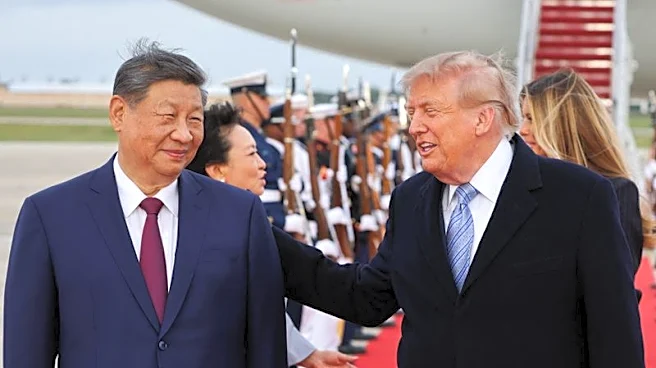
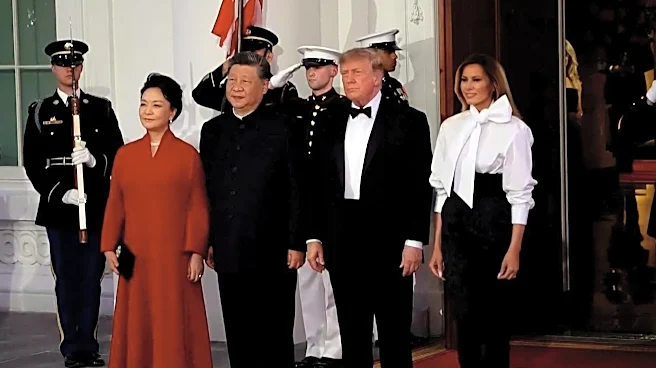
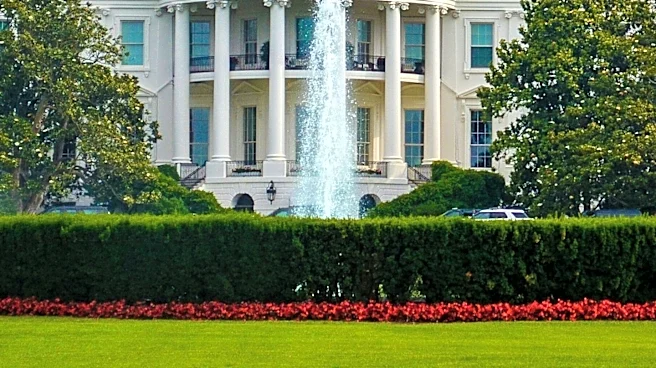
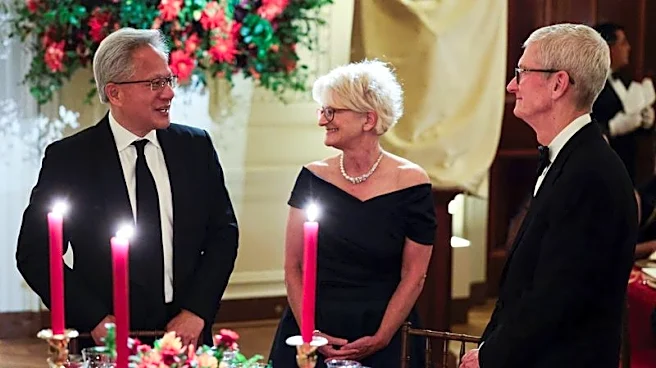
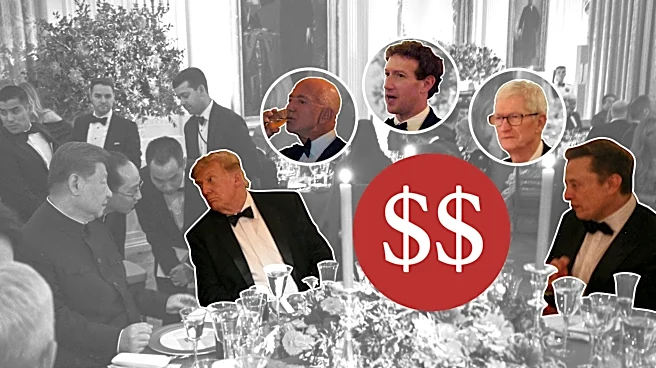
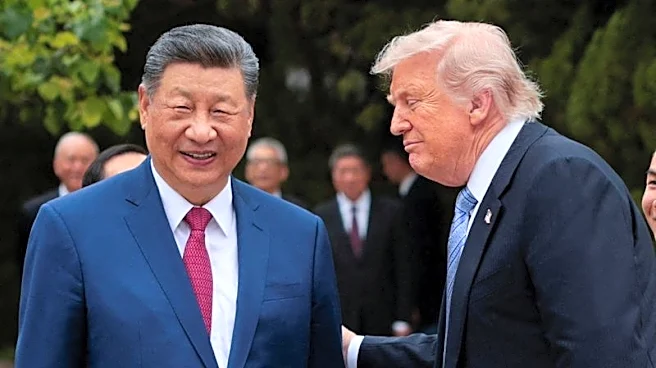
A high-profile dinner hosted by President Trump at the White House included a gathering of prominent U.S. tech leaders and Chinese leader Xi Jinping. Attendees included AMD CEO Lisa Su, Nvidia's Jensen Huang, OpenAI's Sam Altman, Alphabet's Sundar Pichai,
Tesla's Elon Musk, and Amazon founder Jeff Bezos. Notably absent was Anthropic CEO Dario Amodei, who has advocated for more cautious AI development. The discussions between Washington and Beijing are taking place amidst a trade truce, with key issues on the agenda including tariffs, critical minerals, and semiconductors. The U.S. has also proposed a channel for both countries to notify each other about significant AI safety incidents, a proposal that remains under discussion. AMD CEO Lisa Su expressed the importance of a stable global ecosystem for technology and her anticipation of positive outcomes from the talks.
Why It's Important?
This gathering signifies the critical intersection of technology, trade, and international relations between the U.S. and China. The presence of top tech executives underscores the profound impact of U.S.-China relations on the global technology industry, particularly in areas like semiconductors and artificial intelligence. Companies like Nvidia have already experienced significant financial repercussions from U.S. export restrictions on chips to China, highlighting the direct economic stakes involved. The discussions on AI safety incidents are crucial for establishing norms and reducing risks in a rapidly evolving technological landscape. The outcome of these talks could influence future trade policies, investment flows, and the competitive environment for U.S. tech companies, affecting their access to markets, supply chains, and talent. The engagement also reflects the U.S. government's recognition of the tech sector's strategic importance in geopolitical dynamics.
What's Next?
The ongoing negotiations between Washington and Beijing are expected to continue addressing complex issues such as tariffs, critical minerals, and semiconductors. The proposed channel for notifying each other about significant AI safety incidents remains under discussion, and progress on this front could lead to new bilateral agreements or protocols. The tech leaders present at the dinner will likely continue to engage with government officials to advocate for policies that support innovation and global market access while navigating geopolitical tensions. Future developments could include adjustments to export controls, new investment frameworks, or collaborative initiatives in areas of mutual interest, such as AI research and development. The stability of the global technology ecosystem, as highlighted by AMD CEO Lisa Su, will be a key focus for both governments and industry leaders.
Beyond the Headlines
The dinner symbolizes a broader struggle for technological supremacy and influence between the U.S. and China. Beyond immediate trade and AI safety concerns, the presence of these tech giants at such a high-level diplomatic event highlights the increasing role of private industry in shaping foreign policy and national security. The discussions implicitly touch upon the ethical dimensions of AI development and deployment, as well as the long-term implications of technological decoupling or integration. The U.S. government's efforts to engage with China on AI safety, while simultaneously imposing restrictions on advanced chip exports, reflect a complex strategy of competition and cautious cooperation. This dynamic could lead to a redefinition of global technology governance and the emergence of new international standards for critical technologies, impacting everything from data privacy to intellectual property rights.