







What's Happening?
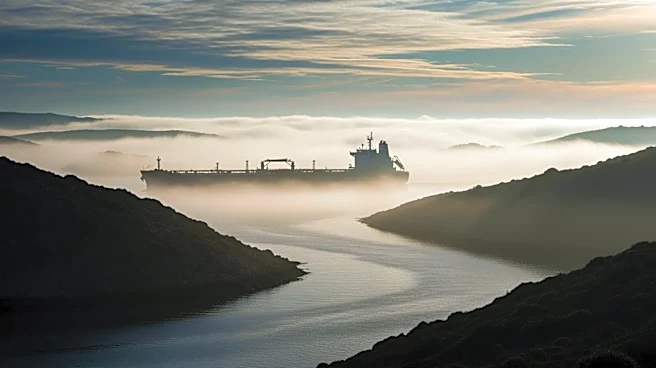
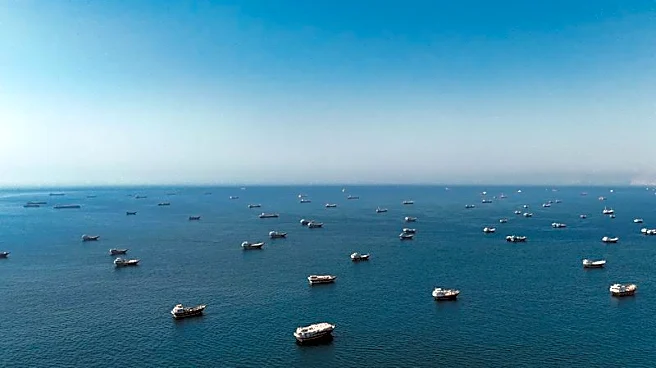
A significant number of oil tankers are employing shadow fleet tactics to navigate the Strait of Hormuz undetected, according to maritime data company Kpler. Between March 1 and May 19, 895 ships crossed the strait, with 358 of them going 'dark' by switching
off their Automatic Identification System (AIS) to avoid detection. This tactic, initially used by Iran's shadow fleet to transport sanctioned oil, has gained traction as the conflict in Iran continues. The number of tankers going dark increased from 37% in the first month of the war to 65% in May. The tactic complicates the estimation of actual ship crossings, with analysts suggesting 7 to 10 vessels transit daily. Some nations, including Japan, have made deals with Iran for safe passage, while others face interception risks from the U.S. blockade in the Gulf of Oman.
Why It's Important?
The use of shadow fleet tactics by oil tankers in the Strait of Hormuz highlights the geopolitical tensions and economic implications of the ongoing conflict in Iran. The strait is a critical chokepoint for global oil supply, and disruptions can significantly impact oil prices and energy security. The increase in tankers going dark suggests a normalization of these tactics, potentially undermining international sanctions and complicating maritime security efforts. The situation affects global oil markets, with potential repercussions for energy-dependent economies and industries. The U.S. blockade and interception efforts further escalate tensions, impacting diplomatic relations and regional stability.
What's Next?
The continued use of shadow fleet tactics may prompt increased international scrutiny and potential policy responses to address maritime security and sanction enforcement. Stakeholders, including governments and international organizations, may seek to enhance monitoring and enforcement mechanisms to prevent unauthorized oil transport. The situation could lead to diplomatic negotiations or increased military presence in the region to ensure safe passage and compliance with international regulations. The evolving dynamics in the Strait of Hormuz will likely influence global energy markets and geopolitical strategies.