



What's Happening?
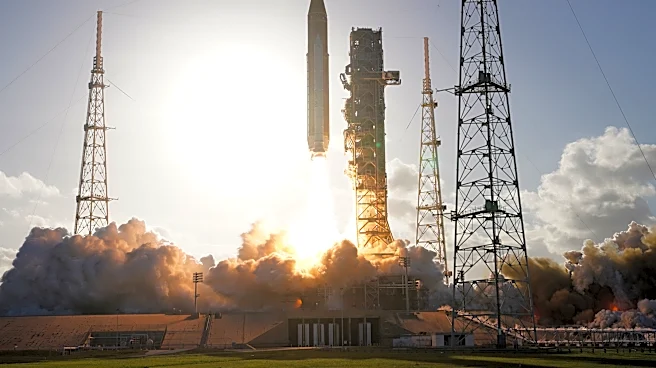
NASA's Artemis II mission has successfully completed the perigee raise burn, a critical maneuver in its journey to the Moon. The mission, which launched on April 1, 2026, from Kennedy Space Center, involves a crew of four astronauts aboard the Orion spacecraft.
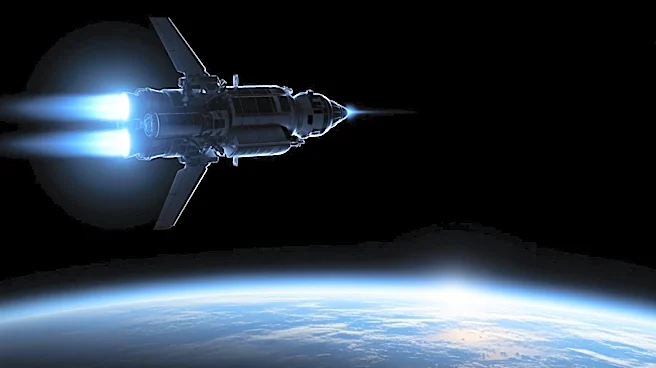
This mission marks the first time humans have traveled beyond low Earth orbit since the Apollo 17 mission in 1972. The perigee raise burn was executed to adjust the spacecraft's orbit, setting it on a stable path for its upcoming translunar injection burn. This burn is scheduled to propel the spacecraft out of Earth's orbit and towards the Moon. The mission management team is set to review the spacecraft's systems before proceeding with the next phase of the mission.
Why It's Important?
The successful execution of the perigee raise burn is a significant step in NASA's Artemis program, which aims to return humans to the Moon and establish a sustainable presence there. This mission is crucial for testing the systems and capabilities required for future deep-space exploration, including potential missions to Mars. The Artemis II mission not only represents a technological achievement but also a strategic move in international space exploration, as it involves collaboration with international partners. The mission's success could pave the way for future commercial and scientific opportunities in space.
What's Next?
Following the perigee raise burn, the Artemis II mission will proceed with the translunar injection burn, scheduled for April 3, 2026. This maneuver will send the spacecraft on a trajectory towards the Moon, where the crew will conduct a multi-hour lunar flyby. The mission is expected to last approximately 10 days, concluding with a splashdown in the Pacific Ocean. The outcomes of this mission will inform the planning and execution of future Artemis missions, including Artemis III, which aims to land humans on the Moon.