





What's Happening?
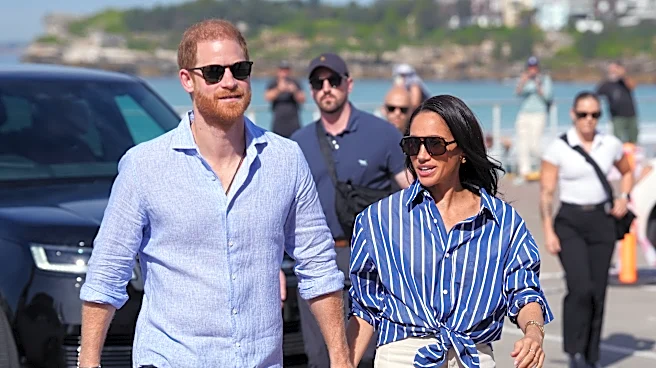
King Charles III has reiterated that Prince Harry and Meghan Markle, the Duke and Duchess of Sussex, remain non-working royals and private citizens, despite their recent return to the United Kingdom. This clarification was communicated through a letter
authorized by the King and sent to government departments and the military. The letter, penned by royal aide Lord Benyon, whose office manages the King's ceremonial and public events, explicitly states that the Duke and Duchess do not use their 'Royal Highness' styles. It also directs that any operational security concerns involving them should be handled by relevant police authorities. The couple stepped down from their roles as working royals in January 2020, citing personal and financial reasons, and relocated to California. Their return to the U.K. in August had sparked speculation, but the King's directive confirms there is no change to their status. The letter emphasizes that their charitable work is a personal matter, undertaken in a private capacity, akin to private citizens with commercial and charitable interests.
Why It's Important?
This reaffirmation from King Charles III is significant as it clearly defines the boundaries of the Duke and Duchess of Sussex's roles within the British Royal Family and their public engagements. For U.S. audiences, particularly those interested in the couple's activities and their connection to the monarchy, this clarifies that their endeavors, including any charitable work or public appearances, are conducted in a private capacity, separate from official royal duties. This distinction impacts how their actions are perceived globally, including in the U.S., where they have established a significant presence. It underscores the Royal Family's commitment to maintaining a clear separation between working royals and those who have chosen a more independent path, influencing public and media expectations regarding their involvement in state affairs or official representation. The directive also has implications for security protocols and funding, as any recourse to public funds for their activities would need to be directed to Buckingham Palace, rather than being automatically assumed as part of royal expenditure.
What's Next?
Following this clarification, Prince Harry is expected to proceed with his annual engagements related to the WellChild awards, typically held in mid-September, as a private citizen. Meghan Markle is also reportedly planning to re-engage with her U.K.-based charities in a private capacity. The couple's children, Prince Archie and Princess Lilibet, are anticipated to begin school in the U.K. near the family's reported countryside retreat. The directive from King Charles III aims to prevent any further confusion or doubt regarding the Duke and Duchess's status and the courtesies extended to them. Any specific questions from official and State organizations about their treatment, especially concerning public funds, will be directed to Buckingham Palace. Operational security issues will continue to be handled by the relevant police authorities, reinforcing their status as private individuals with specific security needs rather than official royal protection.
Beyond the Headlines
The King's directive highlights a broader evolution within modern monarchies, particularly concerning the roles and responsibilities of non-working members. This move reflects a strategic effort by the Royal Family to streamline its public image and operations, ensuring that official duties and public funds are clearly allocated to working royals. For the Duke and Duchess of Sussex, this formalizes their chosen path of financial independence and privacy, allowing them greater latitude in their commercial and charitable pursuits without the constraints or expectations associated with official royal representation. It also underscores the delicate balance between maintaining family ties and upholding institutional protocols. The decision to explicitly state their non-working status, even after their return to the U.K., suggests a desire to avoid ambiguity and manage public perception, both domestically and internationally, regarding their involvement in royal affairs. This approach could set a precedent for how other royal families manage similar situations in the future.