



What's Happening?
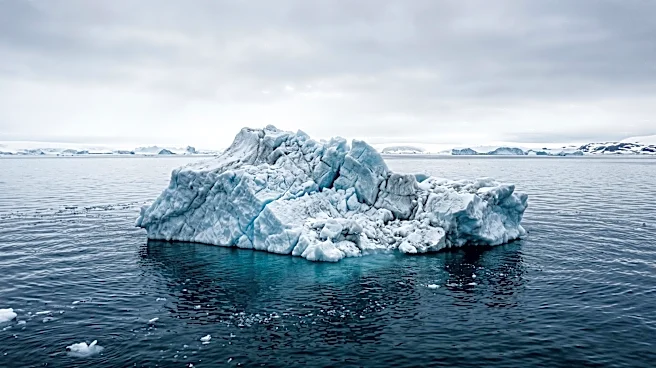
The International Union for Conservation of Nature (IUCN) has urged the European Union to prioritize nature and the well-being of Arctic communities in the implementation of its new 'Europe’s Northern Neighbourhood: A New Strategy for the Arctic,' published
on October 20, 2026. The IUCN welcomes the strategy's commitment to multilateral cooperation, climate research, and support for Arctic inhabitants, particularly its focus on marine protection, precautionary fisheries management, pollution action, Indigenous Peoples’ participation, and renewable energy transition. However, the IUCN expresses concern that the new strategy does not retain the 2021 commitment to a multilateral legal prohibition on further hydrocarbon development in the Arctic, instead focusing on preventing developments that threaten Arctic ecosystems, which could allow for more exceptions. The organization calls for the EU to restore its ambition to prevent new Arctic oil and gas exploration and development while supporting a just transition for affected communities.
Why It's Important?
This development is important because the Arctic region is undergoing significant environmental and geopolitical changes, and the EU's strategy will have a substantial impact on its future. The IUCN's call highlights the critical balance between economic development and environmental protection in a vulnerable ecosystem. The shift in language regarding hydrocarbon development could have long-term implications for climate change efforts and the preservation of Arctic biodiversity. If the EU's strategy allows for more exceptions to oil and gas development, it could undermine global efforts to reduce fossil fuel reliance and accelerate climate change, affecting not only the Arctic but also global weather patterns and sea levels. The emphasis on Indigenous Peoples' rights and participation is crucial for ensuring equitable and sustainable development that respects local cultures and livelihoods, setting a precedent for how major powers engage with indigenous communities in resource-rich regions.
What's Next?
The IUCN encourages the EU to make the Kunming–Montreal Global Biodiversity Framework an explicit foundation for the strategy's implementation, with measurable contributions to ecosystem protection, restoration, and species recovery. This includes establishing clear responsibilities, timelines, indicators, and dedicated biodiversity financing, with progress assessed through ecological outcomes and benefits for people. The IUCN also advocates for robust environmental assessments, rigorous project evaluations, and consideration of cumulative and transboundary impacts for all Arctic development, including infrastructure, transport, energy, and critical raw materials. Furthermore, the IUCN will continue to support cooperation as an Observer to the Arctic Council, contributing scientific expertise to connect conservation, sustainable use, and the well-being of Arctic peoples. The EU's response to these recommendations will determine the future trajectory of environmental protection and sustainable development in the Arctic.
Beyond the Headlines
The debate over hydrocarbon development in the Arctic touches upon deeper ethical and economic considerations. While the EU's strategy aims for security, climate resilience, and sustainable prosperity, the IUCN's concerns highlight the tension between short-term economic gains from resource extraction and the long-term environmental and social costs. The strategy's approach to Indigenous Peoples' rights and knowledge is also a critical aspect, as it reflects a broader global trend towards recognizing and integrating indigenous perspectives in environmental governance. The outcome of this implementation will not only shape the Arctic's ecological future but also influence international norms for resource management, climate action, and indigenous rights. It underscores the complex interplay between geopolitical interests, scientific recommendations, and the imperative for environmental stewardship in a rapidly changing world.