



What's Happening?
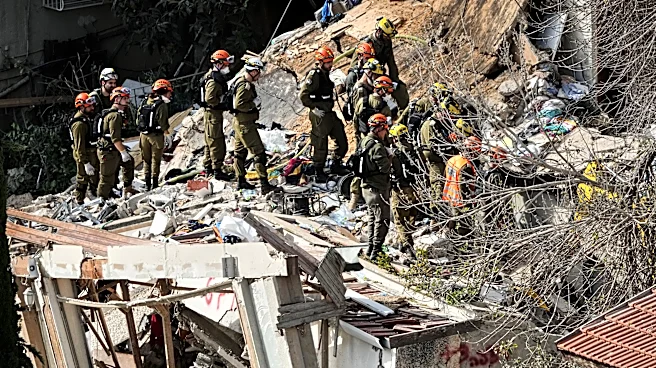
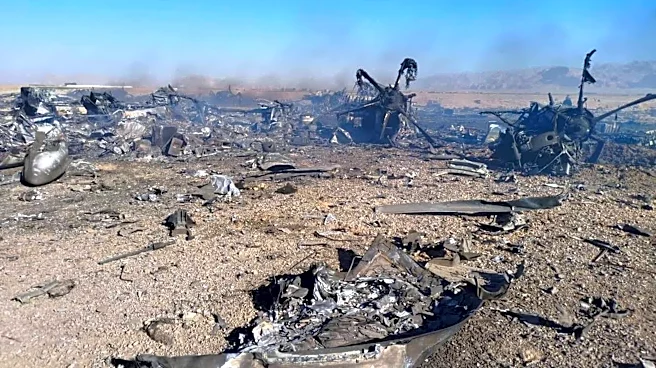
Airstrikes have hit Tehran, and Iranian officials are urging citizens to form human chains around power plants as President Trump's deadline for Iran to reopen the Strait of Hormuz approaches. Trump has threatened to destroy Iran's infrastructure if the strait,
a crucial oil transit route, is not reopened. The situation has escalated tensions, with Iran firing on Saudi Arabia and Israel, leading to the temporary closure of a major bridge. Diplomatic efforts are ongoing, but Iran has rejected the latest U.S. proposal, and the threat of military action looms.
Why It's Important?
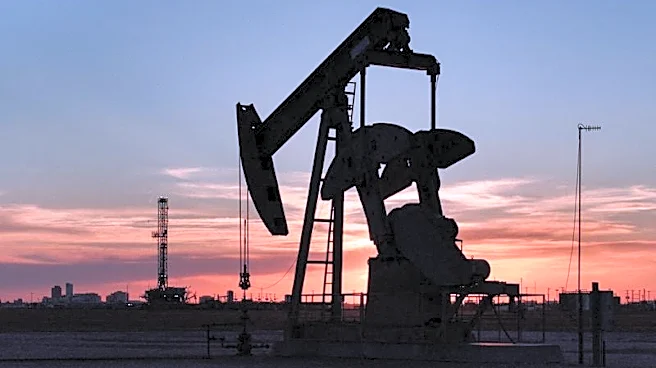
The closure of the Strait of Hormuz by Iran has significant implications for the global economy, particularly affecting oil prices. The strait is a vital passage for a fifth of the world's oil supply, and its closure has caused oil prices to surge, impacting global markets. The potential for military conflict raises concerns about regional stability and the risk of a broader war. The situation also puts pressure on President Trump domestically and internationally to find a resolution, as the economic and humanitarian costs continue to rise.
What's Next?
As the deadline set by President Trump approaches, the possibility of military action remains high. Diplomatic efforts are ongoing, with mediators from various countries attempting to broker a deal. The outcome of these negotiations will be crucial in determining whether the situation escalates further. The international community is closely monitoring the developments, as any military action could have far-reaching consequences for global security and the economy.