








What's Happening?
Syria and Jordan have reopened the Nasib-Jaber border crossing, which is the sole route for passenger and commercial traffic between the two countries. The crossing was temporarily closed following Jordanian airstrikes in southern Syria. The reopening
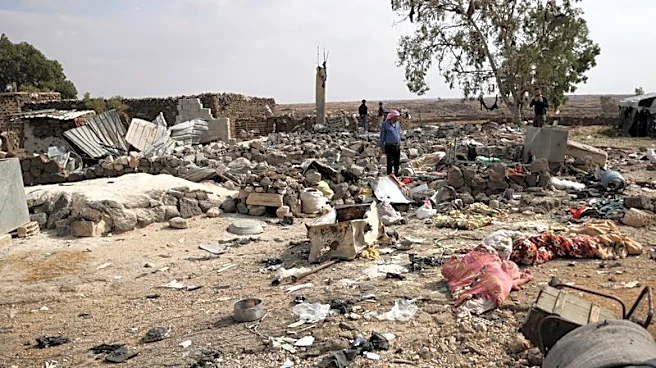
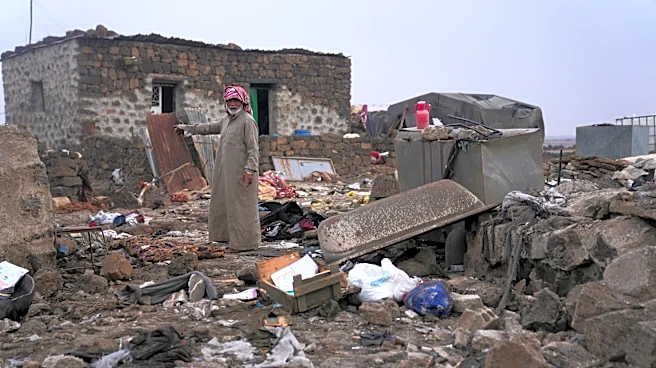
occurred after Syrian foreign affairs chief Asaad al-Shaibani and Jordan’s Minister of Foreign Affairs and Expatriates, Ayman Safadi, agreed to establish a joint security committee. This committee will investigate the recent Jordanian airstrikes that reportedly killed seven civilians, including three children, and injured three others in southern Syria. Jordan stated that its raids targeted hideouts of armed terrorist groups, specifically Islamic State militants, and claimed the operation was coordinated with Damascus. However, Syrian authorities disputed this coordination, asserting they were not consulted prior to the military operations within their territory.
Why It's Important?
The reopening of the Nasib-Jaber border crossing is crucial for regional stability and economic activity, as it restores a vital trade and transit route. The establishment of a joint security committee signifies an effort by both nations to de-escalate tensions and address the aftermath of the airstrikes through diplomatic and cooperative channels. This move is particularly important given the differing accounts of coordination regarding the strikes, with Syria condemning the violation of its airspace without prior consultation. The agreement to form a committee suggests a mutual interest in preventing future incidents and managing cross-border security concerns, including terrorism and smuggling, which have broader implications for regional security and international relations.
What's Next?
The newly formed joint security committee is expected to commence its investigation into the circumstances surrounding the Jordanian airstrikes. This will involve examining the facts on the ground and working towards developing field and intelligence coordination to address terrorist threats while safeguarding civilian lives. Both Syrian and Jordanian officials have expressed a commitment to maintaining close relations and enhancing direct security authority coordination against terrorism and cross-border arms and drug smuggling. The committee's findings and subsequent recommendations will be critical in shaping future security protocols and potentially influencing the level of trust and cooperation between the two nations. The international community will likely monitor these developments closely for their impact on regional stability.
Beyond the Headlines
The incident highlights the complex and often volatile security landscape in the Middle East, where cross-border operations against terrorist groups can lead to unintended civilian casualties and diplomatic friction. The dispute over whether the airstrikes were coordinated underscores the challenges of maintaining sovereignty while addressing shared security threats. This situation also brings to light the delicate balance between national security interests and international law, particularly concerning military actions within another country's borders. The agreement to form a joint committee, despite initial disagreements, suggests a pragmatic approach to conflict resolution, emphasizing dialogue and cooperation over prolonged confrontation, which could serve as a model for managing similar regional disputes.