






What's Happening?
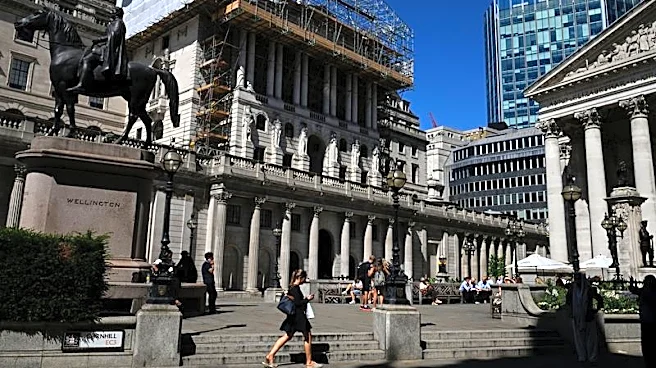
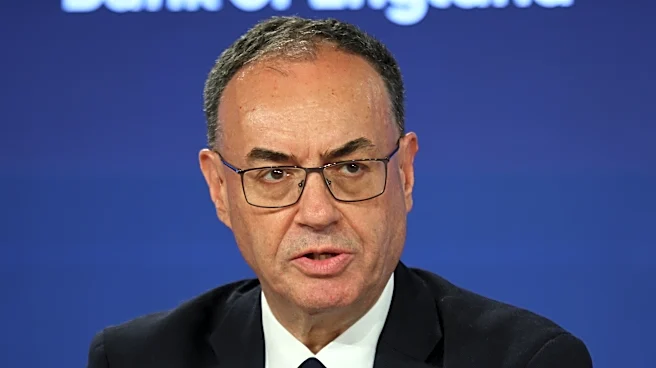
The gold market remains stable as the Bank of England (BoE) decided to keep its interest rates unchanged at 3.75%. This decision aligns with global trends of central banks maintaining or increasing rates to combat inflation. The BoE's decision comes amid
ongoing inflationary pressures fueled by the global energy crisis, particularly due to the conflict in the Middle East. Despite expectations of only two members supporting a rate hike, three members of the BoE's Monetary Policy Committee expressed support for an increase, highlighting the uncertainty surrounding energy prices and their impact on the economy. The gold market has shown little volatility in response to these developments, with prices remaining near critical support levels.
Why It's Important?
The BoE's decision to hold interest rates has implications for the gold market and broader economic conditions. As central banks globally lean towards tightening monetary policies, the opportunity cost of holding non-yielding assets like gold increases, potentially affecting its demand. The stability in gold prices despite these pressures suggests a cautious market outlook, with investors closely watching geopolitical developments and their impact on inflation. The decision also underscores the challenges faced by central banks in balancing inflation control with economic growth, particularly in the face of external shocks like the Middle East conflict.
What's Next?
The BoE's future monetary policy decisions will likely depend on the evolution of the Middle East conflict and its impact on energy prices. If inflationary pressures persist, the BoE may consider raising rates, which could further influence gold prices and investor behavior. Market participants will continue to monitor central bank actions and geopolitical developments to gauge their potential impact on inflation and economic stability.