
What's Happening?
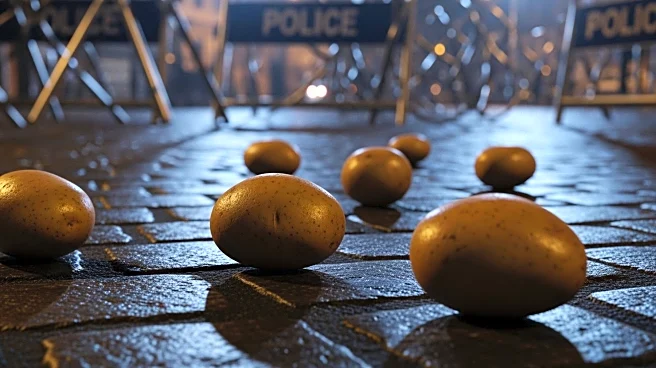
In Brussels, Belgium, farmers protested against the EU-Mercosur trade agreement by pelting police with potatoes. The protest, which involved around 1,000 tractors and over 7,000 farmers, was sparked by concerns
that the trade deal would devastate local agriculture by allowing tariff-free imports from South American countries with lower production standards. The demonstration escalated at the European Parliament, where farmers clashed with police, resulting in the use of tear gas and water cannons. The farmers argue that the deal, which includes Brazil, Argentina, Uruguay, Paraguay, and Bolivia, threatens their livelihoods by introducing cheaper agricultural products into the European market.
Why It's Important?
The protest highlights the tension between trade liberalization and local agricultural interests within the European Union. The EU-Mercosur deal is seen as a threat to European farmers, who fear being undercut by cheaper imports. This situation underscores the broader debate over globalization and its impact on domestic industries. The protest also reflects the power of agricultural lobbies in influencing trade policy, as seen in France's demand for more safeguards before agreeing to the deal. The outcome of these negotiations could have significant implications for EU trade policy and the future of European agriculture.
What's Next?
The EU-Mercosur deal's future remains uncertain, with France and other countries calling for additional protections for farmers. The European Commission may need to renegotiate terms to address these concerns, potentially delaying the agreement's implementation. The protest could also inspire similar actions across Europe, increasing pressure on EU leaders to reconsider the deal's terms. The situation may lead to broader discussions on balancing trade agreements with the protection of local industries.