




What's Happening?
Italian health authorities are observing a significant increase in the spread of West Nile virus, with over 650 infections reported in Italy this year, accounting for approximately half of all cases in Europe. This surge is attributed to rising temperatures
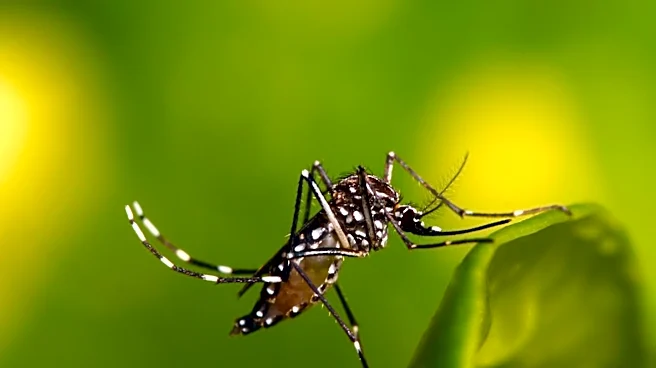
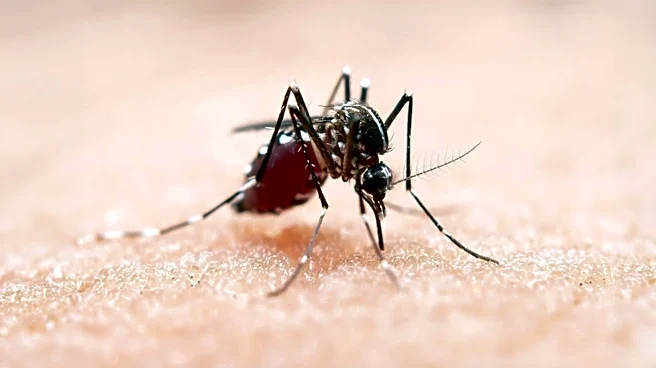
and longer warm seasons, which create more favorable conditions for mosquitoes to reproduce and extend their transmission season. Antonino Bella, a researcher at Italy's National Institute of Health (ISS), stated that higher temperatures linked to climate change help mosquitoes reproduce and increase the chances of spreading the virus to people. West Nile virus has been considered endemic in Italy since 2020, with cases now reported every summer and early fall. While 80% of infected individuals show no symptoms, a small minority, primarily older adults and those with underlying health conditions, can develop severe neurological complications. The European Center for Disease Prevention and Control (ECDC) has warned that Europe's warming trend, characterized by more frequent heat waves and longer, warmer summers, is creating an environment conducive to invasive mosquito species like Aedes albopictus and Aedes aegypti, which can transmit various arboviruses.
Why It's Important?
The expansion of West Nile virus and other mosquito-borne diseases due to climate change poses a growing public health challenge across Europe and potentially globally. The longer mosquito seasons and increased geographic suitability for vectors mean a higher risk of transmission to human populations. This trend could strain healthcare systems, particularly in regions not traditionally accustomed to these diseases. The spread of invasive mosquito species, such as Aedes aegypti, which can transmit dengue, yellow fever, chikungunya, and Zika viruses, indicates a broader threat beyond West Nile virus. The economic impact could include increased healthcare costs, lost productivity due to illness, and potential disruptions to tourism in affected areas. The situation highlights the need for enhanced surveillance, vector control measures, and public awareness campaigns to mitigate the health risks associated with a warming climate.
What's Next?
European countries, including those farther north, are likely to intensify their monitoring and research efforts into mosquito-borne diseases, drawing lessons from Italy's experience. The Netherlands, for instance, has already reported a significant number of West Nile cases this year, indicating the northward expansion of the virus. Public health organizations like the WHO and ECDC will continue to issue warnings and recommendations for member states to prepare for and respond to extended transmission seasons and the potential emergence of new vector-borne diseases. This may involve implementing more robust vector management programs, improving early detection systems, and developing public health strategies to protect vulnerable populations. Continued research into the ecological impacts of climate change on disease vectors and pathogens will be crucial for developing effective long-term prevention and control measures.
Beyond the Headlines
The increasing spread of West Nile virus and other vector-borne diseases serves as a stark illustration of the far-reaching consequences of climate change on public health. Beyond the immediate health impacts, this phenomenon underscores the interconnectedness of environmental changes, biodiversity, and human well-being. The decline in bird diversity, for example, may favor species that are more efficient reservoirs of the virus, further complicating disease control efforts. This situation also highlights potential inequities, as regions with less developed healthcare infrastructure may be disproportionately affected by emerging and re-emerging infectious diseases. Addressing this challenge requires not only medical and public health interventions but also broader climate mitigation and adaptation strategies to reduce the underlying environmental drivers of disease spread. The ethical implications of climate change-induced health crises, particularly for populations with minimal contributions to global greenhouse gas emissions, also warrant consideration.