




What's Happening?
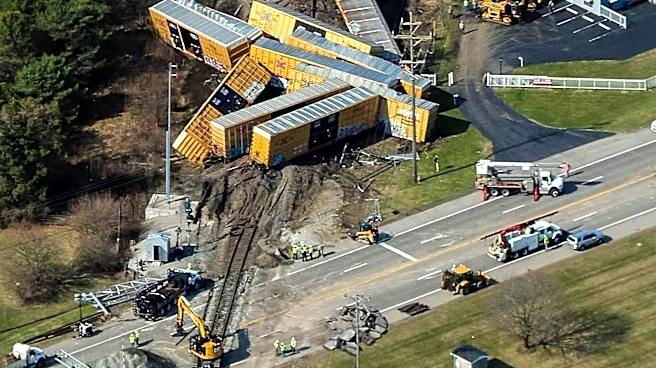
A train derailed in Newark, New Jersey, on Monday morning, resulting in a collision with a utility pole and a garbage truck. The incident occurred when the train went off its tracks. Further details regarding the cause of the derailment, the extent of the damage
to the utility pole and garbage truck, or any potential injuries were not immediately provided in the source. The event took place in Newark, indicating a localized impact on infrastructure and potentially traffic or utility services in the immediate vicinity of the derailment.
Why It's Important?
Train derailments, even those without immediate reports of severe injuries, are significant events due to their potential to disrupt transportation, damage critical infrastructure, and pose safety risks. The collision with a utility pole suggests possible power outages or disruptions to communication services in the affected area, impacting residents and businesses. The involvement of a garbage truck indicates a potential disruption to municipal services or local traffic flow. Such incidents often trigger investigations by transportation authorities to determine the cause, which can range from mechanical failure to track issues or operational errors. The findings of these investigations are crucial for implementing preventative measures and enhancing rail safety protocols, which have broader implications for the efficiency and reliability of rail transport systems across the U.S.
What's Next?
Authorities will likely launch a comprehensive investigation into the cause of the train derailment. This investigation will involve examining the train's mechanical condition, the state of the tracks, and operational procedures leading up to the incident. Emergency crews will be tasked with clearing the derailed train, repairing the damaged utility pole, and addressing any environmental concerns. The affected area may experience temporary road closures or detours to facilitate cleanup and repair efforts. Depending on the severity of the damage, utility services could be restored in phases. The incident may also prompt a review of safety protocols for trains operating in urban areas, particularly concerning their proximity to public infrastructure and roadways.
Beyond the Headlines
Beyond the immediate disruption, a train derailment of this nature can highlight broader issues concerning urban infrastructure resilience and the safety of transportation networks. The vulnerability of utility poles to such incidents underscores the interconnectedness of urban systems, where a single event can cascade into multiple service disruptions. It also brings to light the constant interaction between different modes of transport—rail and road—in densely populated areas and the inherent risks involved. This incident could serve as a case study for urban planners and transportation agencies to re-evaluate safety buffers, infrastructure placement, and emergency response strategies to minimize the impact of future accidents and enhance overall urban resilience.